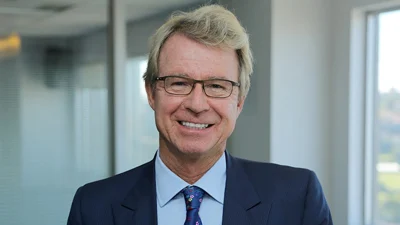
Guardian of practice values
Gross revenues for Guardian Financial Planning grew by 25 per cent in 2004, and the group is aiming to repeat that performance during the coming 12 months. Revenue growth is expected to come from not only improving the productivity of existing advisers, but through attracting more members, and with a recruitment specialist based in each corner of the country - with the exceptions of the Northern Territory and Tasmania - Guardian is well-prepared for the challenges ahead.
Head of Guardian Paul Forbes is upbeat about the group’s success to date, and plans for the future. “A key message from our point of view is that we are a growing group, and looking to provide our services in a smart way. We are a group that isn’t just going to be around, but will be on most people’s radar in the following years.”
Most new advisers to Guardian have come from other groups, although Guardian does try to encourage organic growth by bringing in new planners to existing practices. Forbes says there is usually an obvious reason for practices to jump ship from one dealer group and move to another. “Generally, they are changing their business models, and perhaps making themselves less attractive to the generalists by working as specialist planners.”
Forbes is also convinced that Guardian’s culture works well in luring new people. “What we try to do is promote the practice brand, rather than the Guardian brand. We don’t try to come in between the adviser and the client.
“There are a couple of houses which made it difficult for advisers by interfering with client protocol. We strongly believe the relationship is between the adviser and client, so we shouldn’t get in the way of that.”
Guardian is also selective about the type of people it wishes to recruit. “We did a lot of research into our adviser target market, and what they saw as being of value. You can offer a whole range of services, but you have to look at the things advisers will value.
“We have a clear profile of the sort of advisor who would enjoy being part of this group — people who are financial planners, but see risk as a core part of the business, as well as wealth management.
“We are not trying to be all things to all people — we are trying to build a service model that our target segment will see and think ‘actually, that’s what I’m after’.”
Recommended for you
A strong demand for core fixed income solutions has seen the Betashares Australian Composite Bond ETF surpass $1 billion in funds under management, driven by both advisers and investors.


As the end of the year approaches, two listed advice licensees have seen significant year-on-year improvement in their share price with only one firm reporting a loss since the start of 2025.


Having departed Magellan after more than 18 years, its former head of investment Gerald Stack has been appointed as chief executive of MFF Group.


With scalability becoming increasingly important for advice firms, a specialist consultant says organisational structure and strategic planning can be the biggest hurdles for those chasing growth.