Financial advisers often find themselves wearing multiple hats, taking on the role of adviser and business owner, but one adviser in this role suggested that this only leads to subpar outcomes across both roles.
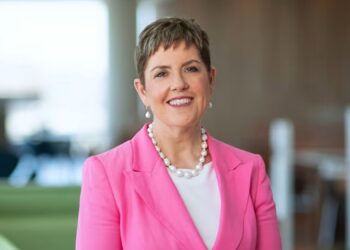
Having kicked off his financial advice career at Rising Tide Financial in 2007, Matt Hale worked his way up the ranks at the firm, taking over the leadership of the firm in 2017. This saw him assume responsibility as managing director as well as his senior financial adviser duties.
However, balancing being an adviser and running a business was challenging and Hale chose to step back from seeing clients.
Reflecting on this decision on an Ensombl Advice Australia podcast, Hale said the time he spent juggling both priorities was “one of the least enjoyable parts” of his career.
“I really struggled to build, sustain and maintain a business and be a good adviser, as well as being a good mentor to the individuals that an adviser needs to mentor.
“Something I’ll always say in an intro call – and this will absolutely not be in line with everyone’s beliefs, but I will take this to the grave – if you want to get financial advice and you are not sitting down with a financial adviser who has someone else running the business or a team alongside them that can allow them to focus heavily on the business, you’re not in the right place. To be a great financial adviser you need to have a really good business behind you.”
The decision to step back from serving clients can be challenging as the relationships and client work is often cited by advisers as the most rewarding part of their job.
Hale explained that, while he misses this, he now has the space to focus on building the business while still remaining a part of the advice profession.
“The only regret that I have is that our business wasn’t what it is when I was advising. I’m starting to look back at the environment that I was there to deliver. We just didn’t have the advice philosophies, the structure, the amazing culture, the flexibility, all these things that I would love to be able to do now.
“I’ve got complete confidence I could do it again, but I’d be a long way off the pace. So, I’m happy to leave it to the experts for the time being.”
Hale is not completely out of the adviser bracket though as he maintains his authorised representative (AR) status and keeps up with his continuing professional development (CPD) requirements.
Despite no longer actively advising clients, Hale said he chose to do this as part of a “risk management” strategy, meaning if the need arises, he can jump back in front of clients again.
As key part of his transition away from a client-facing role, this included handing off clients to another adviser and he said it was important to allow clients time to build up a relationship with the incoming adviser.
This involved a 12-month process with his associate at the time but, if he had his time again, he said he would take it more slowly as the pair had been “doing it on adrenaline” which impacted the business’ profit and loss.
While stepping back from clients gave him space to focus on the business, Hale said this can put strain on company finances that is important to consider when making this decision.
“When you start to do things at the back end of the business that you weren’t currently doing, but you’ve got to pay for that somehow. So, I was the highest paid person in Rising Tide at the time and then you’re dragging me from revenue generating to not revenue generating,” he said.
“There was some hard P&Ls to look at, but we’ve come out the other side in the last few years, which is nice.”
There is another option, however, to ease the burden of so many hats. Some business owners that want to continue providing advice can choose to bring in a practice or general manager to handle the operational running of much of the business, allowing the owner to continue providing advice.
Speaking on an Iress webinar, Adviser FP chief executive and owner Simon Clifford said he chose to go down this route instead.
“Myself and Troy, the other business owner, love sitting in front of clients being financial planners. We would love that [practice manager] to evolve into a GM or a CEO, we want the person that can run the business to be across all the day-to-day issues,” Clifford said.
Business Health owner and principal Rob Bertino added that advice business owners that choose to bring in a practice manager should continue to set the strategy of the firm but then step back into their operational role, such as a financial adviser, allowing the practice manager to then be the driver behind implementing the strategy.