Rising volatility brings new challenges

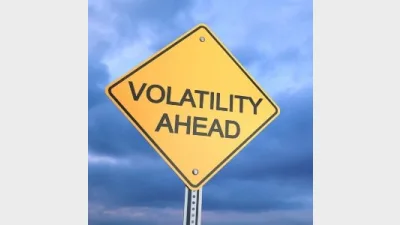

Investors need to be prepared to actively manage rising volatility as markets are currently facing significant uncertainty with a number of macro-economic themes collide, according to SG Hiscock & Company.
This would also mean investors needed to factor in the likelihood of lower returns from equities.
Hamish Tadgell, portfolio manager at SG Hiscock, stressed that even before the escalation of events in Ukraine, there had already been an increase in volatility as markets grappled with the tug of war between rising inflation concerns, monetary tightening, and post COVID economic recovery.
Tadgell said that the most important question was how much was related to event-driven and COVID-19 versus structural shifts.
“The other question for companies is: will they continue to be able to pass on rising cost pressures to consumers? If inflation proves more persistent, and particularly food and energy prices remain higher, it could start to change consumer behaviour and weigh on economic growth,” he said.

On top of that, historically speaking rising inflation episodes generally coincided with unexpected supply shocks and the COVID-19 pandemic arguably resulted in the biggest supply shock in history with the effective lockdown of all economies.
“There is also growing evidence of structural changes driving inflation, including decarbonisation, rising popularist politics, greater government intervention and growing protectionism and geopolitical realignment. These are all inflationary and point to us entering a new higher inflation regime,” he added.
“Investors need to be aware higher inflation and interest rates will have an impact on asset prices and returns from equities will likely be lower going forward.
“The Ukrainian conflict, and sharp rise in commodity prices, also raises the question whether we are currently seeing peak inflation, and potential for the inflation narrative to take a breather.
“Any near-term fade in inflation expectations would likely be positive for growth stocks given their sharp sell-off, whilst reopening will continue to provide tailwinds for cyclicals such as travel and energy stocks. Both scenarios are plausible, and support the argument for maintaining a diversified portfolio and need to actively manage risks,” Tadgell said.
AUTHOR
Oksana Patron
Recommended for you
Natixis Investment Managers has hired a distribution director to specifically focus on the firm’s work with research firms and consultants.


The use of total portfolio approaches by asset allocators is putting pressure on fund managers with outperformance being “no longer sufficient” when it comes to fund development.


With evergreen funds being used by financial advisers for their liquidity benefits, Harbourvest is forecasting they are set to grow by around 20 per cent a year to surpass US$1 trillion by 2029.


Total monthly ETF inflows declined by 28 per cent from highs in November with Vanguard’s $21bn Australian Shares ETF faring worst in outflows.