High cost of risk products to drive changes
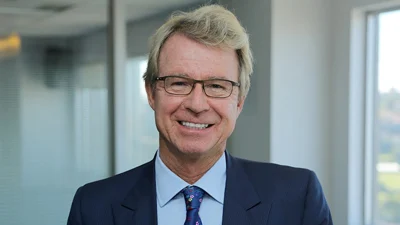
The high cost of life insurance transactions will see the global life companies packaging risk products with other products, says Association of Financial Advisers president John Hibberd.
"If I sell life insurance, I get 45 per cent commission, but if I sell a unit trust I get between 1 and 4 per cent," Hibberd told the recent AFA conference in Melbourne.
"More people are building wealth, not protecting it. That means clients will go for unit trusts and that means new players in our market will go for the investment end of the business."
The new players means global entities, such as AXA and Citigroup, which have taken over Australian operations are now operating to international business practices.
According to research by Tillinghast Towers Perrin, each life insurance transaction costs between 35 to 50 per cent of the transaction value. For an investment product this figure is between 6 and 12 per cent.
The cost of acquiring the client with a life insurance product is between 20-30 per cent of the product value, compared to 2 to 7 per cent for an investment product.
Hibberd says life agents are deriving about 70 per cent of their business from risk and superannuation products.
"We will see the financial services companies putting the risk product in with the unit trust and, by packaging it like this, it will drive costs down," he says.
"The challenge for life agents is to find how to add value to a product that will be a commodity."
Hibberd has no doubt that agents will add value through offering advice and by running their business more efficiently as they cope with lower margins.
Agents will also have to come to grips with e-commerce, although this looks like it will be on a business-to-business basis, not with the customer.
In the US, business-to-business e-commerce is expected to reach $US1.4 trillion by 2003 whereas business-to-consumer is expected total $US108 billion in the same period.
Agents must be alert to change, Hibberd says, and be prepared to restructure their businesses.
"They must reinforce client relationships and not just become product providers," he says. "We are here to provide financial wisdom. We are not just insurers and we must provide relevant services to our customers."
Trevor Matthews, executive vice-president of Manulife in Canada and former National Australia executive, says advisers must understand the financial services business from the consumer side of the table, a view Hibberd says AFA members must embrace as well.
"The global village has come to town. The biggest issue is cost structures and we must deal with that," he says.
Recommended for you
A strong demand for core fixed income solutions has seen the Betashares Australian Composite Bond ETF surpass $1 billion in funds under management, driven by both advisers and investors.


As the end of the year approaches, two listed advice licensees have seen significant year-on-year improvement in their share price with only one firm reporting a loss since the start of 2025.


Having departed Magellan after more than 18 years, its former head of investment Gerald Stack has been appointed as chief executive of MFF Group.


With scalability becoming increasingly important for advice firms, a specialist consultant says organisational structure and strategic planning can be the biggest hurdles for those chasing growth.