Playing wedge politics with financial planning opt-in

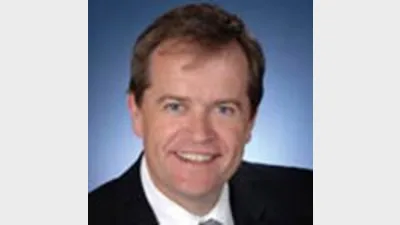

The Minister for Financial Services, Billl Shorten, knows as well as anyone else in the financial services sector that the IFAAA is a minnow. Thus his recent comments must be taken as the utilisation of a convenient 'wedge' that will later be used to justify the Government’s ultimate delivery of a financial advice opt-in formula, writes Mike Taylor.
There is an old saying in politics and industrial relations that would be well understood by a Federal Minister who cut his teeth in the hard school of the Australian Workers’ Union: ‘disunity is death’.
Perhaps that is why the Assistant Treasurer and Minister for Financial Services, Bill Shorten, earlier this month chose to publicly reference the fact that the very nascent and relatively small Independent Financial Advisers Association of Australia (IFAAA) actually supports ‘opt-in’.
Shorten knows as well as anyone else in the financial services sector that the IFAAA is a minnow in terms of representation of the interests of the financial planning industry.
Thus his words must be taken as the utilisation of a convenient ‘wedge’ that will later be used to justify the Government’s ultimate delivery of an opt-in formula.
There are, of course, many groups claiming to represent the interests of the Australian financial planning industry – the Financial Services Council (FSC), the Financial Planning Association (FPA), the Association of Financial Advisers (AFA), the Boutique Financial Planning Principals Group (BFPPG), the Association of Independent Owned Financial Planners (AIOFP) and, more recently, the IFAAA.
Of these groups, the FPA arguably boasts the greatest number of planner members, followed by the AFA.
However the ‘professionalism’ changes that are being wrought within the FPA mean the FSC will emerge as being the most representative of the ‘corporate’ end of the industry – dealer groups, funds managers and institutions. It follows that the FSC will boast the membership with the deepest pockets.
Among the three major groups (the FSC, the FPA and the AFA) there has been virtual unanimity about the wrong-headedness of the Government imposing an opt-in – and groups such as the AIOFP and BFPPG have seemed similarly opposed.
All of which would seem to raise serious questions about the degree to which the financial planning industry has appeared to fail in terms of closing ranks and speaking with one voice.
The three largest organisations may all be singing off a broadly agreed hymn sheet, but this has not prevented Shorten from recognising the tune being sung by a small, discordant group.
It may be true that opt-in is not bad news for all planners, but what is obvious is that it will require that financial planners be treated contractually differently to almost all other sections of the business community while carrying a heavier burden in terms of compliance and costs.
As the FPA has travelled Australia pursuing a road-show program promoting its drive for ‘professionalism’, many questions have been asked by members about the implications of Future of Financial Advice (FOFA) changes – and opt-in in particular.
Amid all the rhetoric, Shorten has seen fit to indicate an answer few road-show attendees will find palatable.
AUTHOR

Mike Taylor
Recommended for you
In this episode of Relative Return Insider, host Keith Ford and AMP chief economist Shane Oliver unpack the RBA’s decision to keep the cash rate on hold in the face of rising inflation and whether the governor’s hawkish tone is a sign of things to come.

In this episode of Relative Return Insider, host Keith Ford and AMP chief economist Shane Oliver discuss the September quarter GDP figures, which show Australia’s economy regaining momentum.
In this new episode of The Manager Mix, host Laura Dew speaks to Haley Devine, head of wealth management at MaxCap Group, to delve into private credit and commercial real estate.


In this new episode of The Manager Mix, host Laura Dew speaks to Benjamin Leung, head of systematic investments at Macquarie Asset Management, to understand the use of systematic investments.