Has being gender-equal helped these banks’ share price?

Three of Australia’s banks have been listed as being among the most gender-equal financial services firms in the world but has this affected their share price performance?
The annual Equileap survey researched over 3,000 companies in 23 countries on their gender balance at board, executive, senior management and workforce level. Companies were ranked on factors such as gender balance, policies promoting gender equality, and equal compensation.
The three banks included in the survey this year were Big Four firms National Australia Bank (NAB), Westpac and Queensland-based Suncorp.
Looking at their share prices over the last three years, the best-performing of these was Suncorp, which returned 33% over the three years to 30 September, 2019.
Suncorp also had the highest female board representation of the three banks with four of its nine board members being female, including its chair Christine McLoughlin.

However, all three of the banks failed to outperform the ASX 200 index which returned 40% over the same period.
It was a different story though over one year as both NAB and Westpac returned 15.7% over one year to 30 September, 2019, according to FE Analytics, while Suncorp returned just 1.7%. The ASX 200 returned 13.1%.
In May, Suncorp chief executive and managing director Michael Cameron resigned from the firm and was replaced by Steve Johnston.
The banks were among seven Australian financial services firms listed by Equileap as being most gender-equal. Aside from the three banks mentioned, the other firms named were property firms Mirvac and Stockland, health insurer Medibank and the Australian Securities Exchange (ASX).
When all seven firms were considered, the best performer over one year was Mirvac which returned 34% over one year to 30 September, 2019. Mirvac was also a strong performer over three years, having returned 56% which put it in second place, but was beaten by the ASX which returned 89.5% over three years.
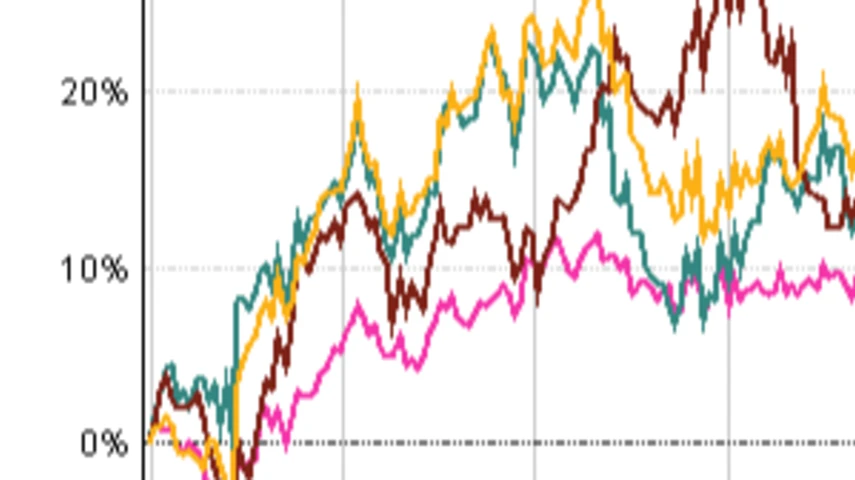
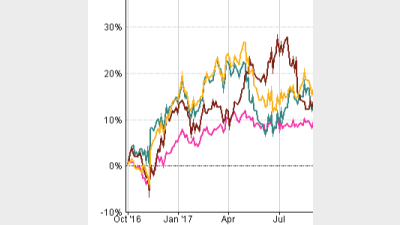
Performance of NAB, Westpac and Suncorp over three years to 30 September, 2019 versus the ASX 200.
AUTHOR

Laura Dew
Recommended for you
Australian equities manager Datt Capital has built a retail-friendly version of its small-cap strategy for advisers, previously only available for wholesale investors.


The dominance of passive funds is having a knock-on effect on Australia’s M&A environment by creating a less responsive shareholder base, according to law firm Minter Ellison.


Morningstar Australasia is scrapping its controversial use of algorithm-driven Medalist ratings in Australia next year and confirmed all ratings will now be provided by human analysts.


LGT Wealth Management is maintaining a neutral stance on US equities going into 2026 as it is worried whether the hype around AI euphoria will continue.