X
  • About
  • Advertise
  • Contact
  • Expert Resources
Get the latest news! Subscribe to the Money Management bulletin
  • News
    • Accounting
    • Financial Planning
    • Funds Management
    • Life/Risk
    • People & Products
    • Policy & Regulation
    • Property
    • SMSF
    • Superannuation
    • Tech
  • Investment
    • Australian Equities
    • Global Equities
    • Managed Accounts
    • Fixed Income
    • ETFs
  • Features
    • Editorial
    • Expert Analysis
    • Guides
    • Outsider
    • Rate The Raters
    • Top 100
  • Media
    • Events
    • Podcast
    • Webcasts
  • Promoted Content
  • Investment Centre
No Results
View All Results
  • News
    • Accounting
    • Financial Planning
    • Funds Management
    • Life/Risk
    • People & Products
    • Policy & Regulation
    • Property
    • SMSF
    • Superannuation
    • Tech
  • Investment
    • Australian Equities
    • Global Equities
    • Managed Accounts
    • Fixed Income
    • ETFs
  • Features
    • Editorial
    • Expert Analysis
    • Guides
    • Outsider
    • Rate The Raters
    • Top 100
  • Media
    • Events
    • Podcast
    • Webcasts
  • Promoted Content
  • Investment Centre
No Results
View All Results
No Results
View All Results
Home Features Editorial

Why simple financial advice is the best advice

by Staff Writer
December 4, 2012
in Editorial, Features
Reading Time: 5 mins read
Share on FacebookShare on Twitter

Financial advisers must be conscious of making their advice easy for clients to understand and knowing the difference between wants and needs, writes Mark Knight.

I was listening to ABC Radio interview a famous architect recently. He emphasised the difference between his clients’ wants and needs.

X

One client wanted a three-vehicle garage so his daughter could house her car when she visited.

The architect said he understood what the client wanted, but he told him he was better off with a garage for two cars and a car-port so he had enough room for his garden plan: that was what the client really needed.

The finance industry confronts the same issue. Conventional wisdom is that investors want to engage more with their financial affairs, want more control, and want to keep costs down. They want to do it themselves (DIY). 

But is that what investors really need? 

I’d strongly argue no. Investing is too complex and, frankly, Australians have better things to do with their time.

What they really need are expertly managed products delivered simply. And that’s exactly what the traditional model is providing.

But we need to be more confident in selling the power of the traditional model’s simplicity, and the freedom it gives Australians to do what is truly meaningful.

We also need to be patient. As markets stabilise and improve, the simplicity of managed products will once again be appreciated.

When I first got into the industry 23 years ago consumers wanted a simpler way of investing in a diversified portfolio of bonds, stocks and properties.

All investors, including retirees, had better things to do with their spare time than read broker reports and contemplate complex price earnings ratios, return on invested capital and porter analysis.

Hence, the acceleration in the evolution of managed funds.

Within a few years consumers also wanted a unified reporting system and a single point of contact – hence the evolution of platforms.

The mass-market consumer wanted simplicity – and as an industry we delivered it. Collectively, we believed that simplicity was needed.

Now we attend conferences and it is common for the dominant message to be that investors are over the big platforms and managed funds, and they want to do their own thing.

Consumers have no doubt reacted to the “risk on/risk off” environment, product freezes and failures, and some rare instances of poor advice. 

Many want to be more self-directed and, as part of this, directly invested in markets – sometimes with an adviser and sometimes without an adviser. 

But is this what the mass-market investor with an average portfolio size of $250,000 to $500,000 really needs? Probably not!

Investing, for a start, is complex. In a fiendishly difficult macro environment, is the average investor equipped to spend time, for example, deciding the correct split between cyclical and defensive stocks?

Direct investing also carries significantly more responsibility. Do consumers need to accept all the responsibilities of a professional trustee, and design and sign off on their own investment strategy?

But, perhaps most importantly, direct investing and control is time-consuming.

Do our clients really need to spend significantly more time thinking about, reading about and administering their investments at the expense of, say, going for a walk with their partner, throwing a ball with their child, looking at the website of their preferred charity, making travel plans or reading a book? 

I’d argue they have better things to do than looking through their portfolio and monitoring the progress of every single security they own, whether debt or equity; better things to do than dwell on the intricacy of why a listed investment company trades at a discount or premium to the value of its assets.

So, what do investors really need? 

I’d argue they need an experience that includes: 

  • Daily online reporting of asset-class exposure across all investments combined;
  • Custodial and trustee obligations taken care of by experts;
  • Security selection by professional fund managers who voluntarily submit themselves to the intense scrutiny of asset consultants and research houses;
  • Integrated tax and distribution statements; and
  • A business model that creates the time and opportunity for the adviser to offer genuinely holistic advice taking in cash flow, loans and debt, assets, family trusts, estate plans, wills and insurances.

And that’s exactly what the traditional model is delivering right now. But we need to communicate that.

Yes, the market has been poor. Yes, there has been some questionable product quality. Yes, some pricing and charging structures had been “over the top” and needed to change. But let’s not throw the baby out with the bathwater. 

We need to address the issues and then go back to our clients with renewed confidence and say: “We understand what you need. We are competent. You can trust us. We will support you to spend more time on your chosen vocation, personal interests, family and friends”.

Let’s try to be mindful of what they actually need, even if they don’t currently realise it. This way we’ll keep them longer-term, and the ones that went their own way will eventually come back as markets normalise.

The average Australian has got better things to do than grapple with financial market complexity –the traditional approach will return to favour. We will have been right to keep things as simple as possible. After all, it’s what investors need.

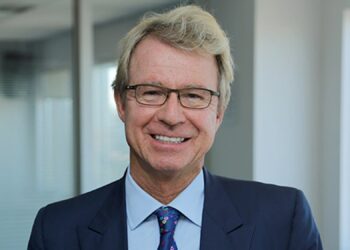
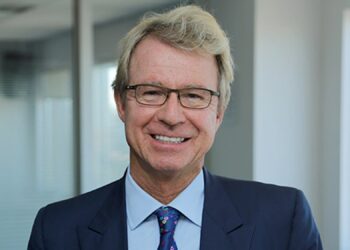
Mark Knight is the head of retail business at Ausbil Dexia Limited.
Tags: Cash FlowFinancial AdvisersFunds ManagementInvestorsTaxationTrustee

Related Posts

Relative Return Insider: MYEFO, US data and a 2025 wrap up

by Laura Dew
December 18, 2025

In this final episode of Relative Return Insider for 2025, host Keith Ford and AMP chief economist Shane Oliver wrap...

Relative Return Insider: RBA holds, Fed cuts and Santa’s set to rally

by Staff
December 11, 2025

In this episode of Relative Return Insider, host Keith Ford and AMP chief economist Shane Oliver unpack the RBA’s decision...

Relative Return Insider: GDP rebounds and housing squeeze getting worse

by Staff Writer
December 5, 2025

In this episode of Relative Return Insider, host Keith Ford and AMP chief economist Shane Oliver discuss the September quarter...

Leave a Reply Cancel reply

Your email address will not be published. Required fields are marked *

VIEW ALL
Promoted Content

Consistency is the most underrated investment strategy.

In financial markets, excitement drives headlines. Equity markets rise, fall, and recover — creating stories that capture attention. Yet sustainable...

by Industry Expert
November 5, 2025
Promoted Content

Jonathan Belz – Redefining APAC Access to US Private Assets

Winner of Executive of the Year – Funds Management 2025After years at Goldman Sachs and Credit Suisse, Jonathan Belz founded...

by Staff Writer
September 11, 2025
Promoted Content

Real-Time Settlement Efficiency in Modern Crypto Wealth Management

Cryptocurrency liquidity has become a cornerstone of sophisticated wealth management strategies, with real-time settlement capabilities revolutionizing traditional investment approaches. The...

by PartnerArticle
September 4, 2025
Editorial

Relative Return: How fixed income got its defensiveness back

In this episode of Relative Return, host Laura Dew chats with Roy Keenan, co-head of fixed income at Yarra Capital...

by Laura Dew
September 4, 2025

Join our newsletter

View our privacy policy, collection notice and terms and conditions to understand how we use your personal information.

Podcasts

Relative Return Insider: MYEFO, US data and a 2025 wrap up

December 18, 2025

Relative Return Insider: RBA holds, Fed cuts and Santa’s set to rally

December 11, 2025

Relative Return Insider: GDP rebounds and housing squeeze getting worse

December 5, 2025

Relative Return Insider: US shares rebound, CPI spikes and super investment

November 28, 2025

Relative Return Insider: Economic shifts, political crossroads, and the digital future

November 14, 2025

Relative Return: Helping Australians retire with confidence

November 11, 2025

Top Performing Funds

FIXED INT - AUSTRALIA/GLOBAL BOND
Fund name
3 y p.a(%)
1
DomaCom DFS Mortgage
211.38
2
Loftus Peak Global Disruption Fund Hedged
110.90
3
SGH Income Trust Dis AUD
80.01
4
Global X 21Shares Bitcoin ETF
76.11
5
Smarter Money Long-Short Credit Investor USD
67.63
Money Management provides accurate, informative and insightful editorial coverage of the Australian financial services market, with topics including taxation, managed funds, property investments, shares, risk insurance, master trusts, superannuation, margin lending, financial planning, portfolio construction, and investment strategies.

Subscribe to our newsletter

View our privacy policy, collection notice and terms and conditions to understand how we use your personal information.

About Us

  • About
  • Advertise
  • Contact
  • Terms & Conditions
  • Privacy Collection Notice
  • Privacy Policy

Popular Topics

  • Financial Planning
  • Funds Management
  • Investment Insights
  • ETFs
  • People & Products
  • Policy & Regulation
  • Superannuation

© 2025 All Rights Reserved. All content published on this site is the property of Prime Creative Media. Unauthorised reproduction is prohibited

No Results
View All Results
NEWSLETTER
  • News
    • All News
    • Accounting
    • Financial Planning
    • Funds Management
    • Life/Risk
    • People & Products
    • Policy & Regulation
    • Property
    • SMSF
    • Superannuation
    • Tech
  • Investment
    • All Investment
    • Australian Equities
    • ETFs
    • Fixed Income
    • Global Equities
    • Managed Accounts
  • Features
    • All Features
    • Editorial
    • Expert Analysis
    • Guides
    • Outsider
    • Rate The Raters
    • Top 100
  • Media
    • Events
    • Podcast
    • Webcasts
  • Promoted Content
  • Investment Centre
  • Expert Resources
  • About
  • Advertise
  • Contact Us

© 2025 All Rights Reserved. All content published on this site is the property of Prime Creative Media. Unauthorised reproduction is prohibited