X
  • About
  • Advertise
  • Contact
  • Expert Resources
Get the latest news! Subscribe to the Money Management bulletin
  • News
    • Accounting
    • Financial Planning
    • Funds Management
    • Life/Risk
    • People & Products
    • Policy & Regulation
    • Property
    • SMSF
    • Superannuation
    • Tech
  • Investment
    • Australian Equities
    • Global Equities
    • Managed Accounts
    • Fixed Income
    • ETFs
  • Features
    • Editorial
    • Expert Analysis
    • Guides
    • Outsider
    • Rate The Raters
    • Top 100
  • Media
    • Events
    • Podcast
    • Webcasts
  • Promoted Content
  • Investment Centre
No Results
View All Results
  • News
    • Accounting
    • Financial Planning
    • Funds Management
    • Life/Risk
    • People & Products
    • Policy & Regulation
    • Property
    • SMSF
    • Superannuation
    • Tech
  • Investment
    • Australian Equities
    • Global Equities
    • Managed Accounts
    • Fixed Income
    • ETFs
  • Features
    • Editorial
    • Expert Analysis
    • Guides
    • Outsider
    • Rate The Raters
    • Top 100
  • Media
    • Events
    • Podcast
    • Webcasts
  • Promoted Content
  • Investment Centre
No Results
View All Results
No Results
View All Results
Home Features Editorial

Thinking like a business owner

by Julian Morrison
September 18, 2014
in Editorial, Features
Reading Time: 5 mins read
Share on FacebookShare on Twitter

Investors who take a business-owner approach and shut out market noise are in the best position to distinguish between price and value, Julian Morrison writes. 

People who have founded, built and grown successful companies over time dominate lists of the world’s wealthiest people. When considering how to build long-term wealth, there are some lessons to be learned from them. 

X

In most cases, they have built their families’ wealth by recognising a great, long-term business opportunity, and have taken equity (founding capital) in that business at a bargain price. They were pioneers – identifying and supporting the prospects of a business that nobody else did at the time. 

For those of us who cannot build companies, we should at least acquire equity in existing businesses at bargain prices especially when the opportunity arises to buy cheaply and particularly when a company stumbles and is unloved by most investors. 

Unfortunately, share market investors find it difficult to think like long-term business owners. Even if they see themselves as 'investors’ rather than 'traders’, they typically buy shares in anticipation of a short-term price increase. The average holding period for Australian Securities Exchange (ASX) listed shares is around 12 months. 

Moreover, the constant flow of information on companies, markets and economies can overwhelm rational thinking. As humans, we have great trouble weighing the importance of this information and making decisions based upon it because we are vulnerable to reacting to 'noise’. 

As Fischer Black put it, “People who trade on noise are willing to trade even though from an objective point of view they would be better off not trading. Perhaps they think the noise they are trading on is information. Or perhaps they just like to trade. Most of the time, the noise traders as a group will lose money”. 

The business owner distinguishes between price and value 

When buying a business privately, you have to undertake extensive due diligence to understand its ability to generate future earnings. This process is critical in assessing the value of the business to the buyer. A period of negotiation is also likely, where the buyer and seller each set out their assessment of value. This negotiation process ultimately leads to an agreement on price. 

If the buyer insists on a price they deem to be at or below value, they at least stand a chance of earning a decent return on their investment. In the share market however, the process often lacks discipline, and the rationale may appear more like the following: 

'My aim is to generate $50,000 in annual income. Company XYZ is a “blue chip” company, is financially strong, and pays a dividend of 50 cents per share. Therefore I will buy 100,000 shares, which will provide me with my income objective.’ 

The problem with this is that there is no assessment of fundamental value versus the share price, and no assessment of the risk of overpaying. Instead, income is being purchased regardless of price. To emphasise this risk in simple terms, if you pay twice what a company is worth and the share price later reverts to its true value, you can lose half your money. It may still be a great company, but that doesn’t help at all if you overpaid. 

Investors who recognise the risk of overpaying stand a better chance of dealing with it than their 'noise-trading’ counterparts. Try asking the following simple questions when considering a share purchase and you may foster a more effective 'business owner’ mindset: 

If I had to purchase 100 per cent of the business and could not sell it easily, would I buy it at this price? 

Do I understand the earning capacity of the business – not just for the next year or two but over a full business cycle – based on a diligent assessment? The answer to this question will form the basis of what the company is worth. If you do not have a sense of the true value of the business, you have no way of knowing whether you are overpaying at the current price. 

Why does someone else want to sell this business to me at this price? If the reasons cannot be clearly articulated, you may be overpaying. 

The business owner approach 

If the short-term average holding period on the ASX represents one end of the investor spectrum, the following quote from Warren Buffett represents the other end: “¨we approach the transaction as if we were buying into a private business. When investing, we view ourselves as business analysts – not as market analysts, not as macroeconomic analysts, and not even as security analysts”.  

Investors who are able to shut out the noise and think like business owners are more likely to discern between price and value. This is very important because the difference between the two will determine prospective risk and return. High risk and low return are two sides to the same coin – both of which result from overpaying. 

In our experience, approaching each investment as a long-term business owner leads to a more disciplined assessment of price versus value, it reduces the risk of overpaying and it increases prospective returns. 

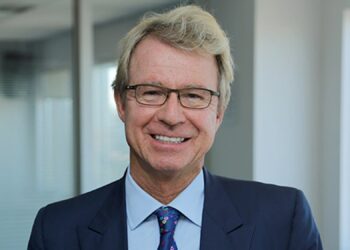
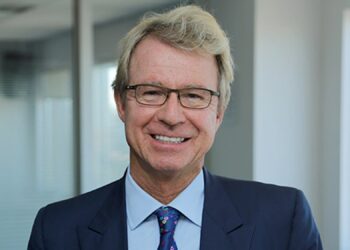
Julian Morrison is national key account manager at Allan Gray Australia.  
Tags: ASXAustralian Securities Exchange

Related Posts

Relative Return Insider: MYEFO, US data and a 2025 wrap up

by Laura Dew
December 18, 2025

In this final episode of Relative Return Insider for 2025, host Keith Ford and AMP chief economist Shane Oliver wrap...

Relative Return Insider: RBA holds, Fed cuts and Santa’s set to rally

by Staff
December 11, 2025

In this episode of Relative Return Insider, host Keith Ford and AMP chief economist Shane Oliver unpack the RBA’s decision...

Relative Return Insider: GDP rebounds and housing squeeze getting worse

by Staff Writer
December 5, 2025

In this episode of Relative Return Insider, host Keith Ford and AMP chief economist Shane Oliver discuss the September quarter...

Leave a Reply Cancel reply

Your email address will not be published. Required fields are marked *

VIEW ALL
Promoted Content

Consistency is the most underrated investment strategy.

In financial markets, excitement drives headlines. Equity markets rise, fall, and recover — creating stories that capture attention. Yet sustainable...

by Industry Expert
November 5, 2025
Promoted Content

Jonathan Belz – Redefining APAC Access to US Private Assets

Winner of Executive of the Year – Funds Management 2025After years at Goldman Sachs and Credit Suisse, Jonathan Belz founded...

by Staff Writer
September 11, 2025
Promoted Content

Real-Time Settlement Efficiency in Modern Crypto Wealth Management

Cryptocurrency liquidity has become a cornerstone of sophisticated wealth management strategies, with real-time settlement capabilities revolutionizing traditional investment approaches. The...

by PartnerArticle
September 4, 2025
Editorial

Relative Return: How fixed income got its defensiveness back

In this episode of Relative Return, host Laura Dew chats with Roy Keenan, co-head of fixed income at Yarra Capital...

by Laura Dew
September 4, 2025

Join our newsletter

View our privacy policy, collection notice and terms and conditions to understand how we use your personal information.

Podcasts

Relative Return Insider: MYEFO, US data and a 2025 wrap up

December 18, 2025

Relative Return Insider: RBA holds, Fed cuts and Santa’s set to rally

December 11, 2025

Relative Return Insider: GDP rebounds and housing squeeze getting worse

December 5, 2025

Relative Return Insider: US shares rebound, CPI spikes and super investment

November 28, 2025

Relative Return Insider: Economic shifts, political crossroads, and the digital future

November 14, 2025

Relative Return: Helping Australians retire with confidence

November 11, 2025

Top Performing Funds

FIXED INT - AUSTRALIA/GLOBAL BOND
Fund name
3 y p.a(%)
1
DomaCom DFS Mortgage
211.38
2
Loftus Peak Global Disruption Fund Hedged
110.90
3
SGH Income Trust Dis AUD
80.01
4
Global X 21Shares Bitcoin ETF
76.11
5
Smarter Money Long-Short Credit Investor USD
67.63
Money Management provides accurate, informative and insightful editorial coverage of the Australian financial services market, with topics including taxation, managed funds, property investments, shares, risk insurance, master trusts, superannuation, margin lending, financial planning, portfolio construction, and investment strategies.

Subscribe to our newsletter

View our privacy policy, collection notice and terms and conditions to understand how we use your personal information.

About Us

  • About
  • Advertise
  • Contact
  • Terms & Conditions
  • Privacy Collection Notice
  • Privacy Policy

Popular Topics

  • Financial Planning
  • Funds Management
  • Investment Insights
  • ETFs
  • People & Products
  • Policy & Regulation
  • Superannuation

© 2025 All Rights Reserved. All content published on this site is the property of Prime Creative Media. Unauthorised reproduction is prohibited

No Results
View All Results
NEWSLETTER
  • News
    • All News
    • Accounting
    • Financial Planning
    • Funds Management
    • Life/Risk
    • People & Products
    • Policy & Regulation
    • Property
    • SMSF
    • Superannuation
    • Tech
  • Investment
    • All Investment
    • Australian Equities
    • ETFs
    • Fixed Income
    • Global Equities
    • Managed Accounts
  • Features
    • All Features
    • Editorial
    • Expert Analysis
    • Guides
    • Outsider
    • Rate The Raters
    • Top 100
  • Media
    • Events
    • Podcast
    • Webcasts
  • Promoted Content
  • Investment Centre
  • Expert Resources
  • About
  • Advertise
  • Contact Us

© 2025 All Rights Reserved. All content published on this site is the property of Prime Creative Media. Unauthorised reproduction is prohibited