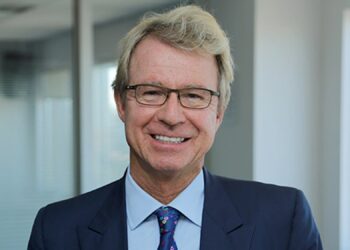
Dominic McCormick explains why investors and financial advisers need to look at the here and now when it comes to currency management in investment portfolios – especially in the current economic climate.
Many investors and advisers seem to accept the premise that the effect of currency on international equity returns mostly washes out in the long term.
Therefore, the argument goes, it doesn’t really matter whether currency is hedged or not on your overseas equity exposures — in the long term performance will be much the same.
This may be true in a theoretical world and even looking backward over selected longer term periods of history for some currencies.
However, I think it is a flawed approach in the practical world of managing investments in real-time and also in managing client expectations — especially given some of the structural issues affecting currency markets following the global financial crisis (GFC).
To highlight the conventional wisdom, a recent personal finance article discussing currency quoted a financial adviser making the following comments:
- “The currency only affects an investor’s return when the profits are translated into Australian dollars.”
- “The currency, though it can be volatile, will revert to mean levels and therefore, for long-term investors, currency movements are not that important. It evens itself out over time.”
The first statement is clearly misleading. The reality is returns are translated at the currency rates ruling at any particular time whether investments are realised or not.
Currency movements will therefore have a significant impact on short and medium-term returns and the path of those returns over time, even if their impact were to even out in the long term.
The second statement is widely accepted although wrong in my opinion.
Looking backwards it seems plausible, especially considering Australian dollar movements against the key currency, the US dollar, since the Australian dollar was allowed to float against it in December 1983.
Over that period the Australian dollar has ranged from US$1.05 to US$0.49, although it has spent more than two-thirds of that time between US$0.65 and US$0.85.
In fact, in over 75 per cent of 10-year periods since the float date, the impact of exchange rate movements to an unhedged Australian investor in US dollar assets has been less than 3 per cent per annum either way.
But this focus on the US dollar neglects moves against some other currencies.
For example, against the Japanese yen the Australian dollar fell from a high of 250 yen in the early 1980s to as low as 60 yen in the mid 90s (a fall of 76 per cent), and is only modestly above that level at around 80 yen now.
To the extent that one had Japanese equity exposure through this period, hedging the currency has exacerbated the poor underlying return from Japanese equities.
Note, however, we are excluding some pick-up in the hedged return from the interest rate differential.
Consider the extreme situation of an Icelandic or Zimbabwean investor — the decision to hedge or not to hedge their offshore assets is probably the single most important financial decision they’ve ever made. In these cases, there will definitely be no ‘evening out’ in the long term.
Thus, while it may broadly be the case that against the US dollar the impact of currency has largely washed out for Australian dollar investors in recent decades, there are plenty of examples that prove that this is not always the case.
Moreover, I believe there are structural issues emanating out of the imbalances of the GFC that make significant currency movements and major dislocations more likely in the current environment.
This relates specifically to the varying experience of countries through the GFC, the implications of different economic growth levels and interest rates going forward and the pursuit of policies in some countries specifically designed to debase their currency versus others.
This last element has become much more important recently, with central banks in the US, Japan, Taiwan, South Africa, Brazil and Britain, amongst others, either intervening in currency markets, talking about doing so, or pursuing other policies that are likely to lower their currency to improve their export position and ultimately improve economic growth.
This is particularly an issue for local investors, since Australia is one of the few countries not pursuing policies to lower or debase the currency.
Indeed, the Reserve Bank of Australia seems happy with the higher currency (at the time of writing at least) because it slows down the booming mining sector and reduces the need to increase interest rates.
In this environment, the idea that one should blindly take on large, unhedged long-term exposures to the currencies of countries committed to debasing the value of those very currencies strikes me as naïve or even negligent in terms of managing portfolios.
This doesn’t mean that you should not hold some exposure to these currencies for diversification (especially since sometimes intervention doesn’t work and markets can overreact in the short term), but it should be done with recognition of the risks being taken on and an understanding of market dynamics.
Simply saying currency effects will ‘wash out over time’ or ‘no one can predict currencies so why bother’ is abandoning the management of a factor likely to be a major driver to portfolio risk and return over the next 10 years.
Picking currencies is difficult, but this is more a risk management exercise than a market timing one.
I am not suggesting that an outright fully hedged or fully unhedged position is the appropriate solution for investors.
Rather, investors need to consider their overall exposure to non-Australian dollar investments, and the decision to hedge part or all of this should be a proactive portfolio construction decision — not simply a response to the choice (or lack of choice) of international investment structures available.
One approach is to seek managers who are active in currency management.
Unfortunately, there are very few international managers who have proved adept at implementing active currency management to enhance returns and/or decrease risks.
There are some managers who state they are prepared to be active in currency management, but historically have done little to demonstrate this.
Investors should also note that it is not just through managing their currency exposure that they can benefit from major developments in currency markets.
For example, managed futures funds are able to take advantage of some of the trends that develop in FX markets.
Gold and gold-related investments are also a significant beneficiary of the current environment and the trend to debase currencies.
Managing currency exposure is clearly challenging in the current environment. The Australian dollar looks expensive on a purchasing power parity basis.
Generally, fair value is put in the low 70/early 80s rather that the current high 90s against the US dollar, so on that basis it may be overvalued by 20 per cent or more.
However, currencies do have a tendency to move well above fair value when momentum and market sentiment are in their favour.
This is particularly the case in an environment where other Governments and central banks are intervening to lower the value of their currencies.
The argument that currency impacts even out in the long term is essential to those retail investors and financial advisers who are trying to build simple portfolios using low-cost vanilla/passive international funds or exchange-traded funds, since these mostly come in an unhedged form.
However, in my view this approach may be delivering a sub-optimal solution, and one prone to disappointing returns or excessive risks in the current and future environment.
Indeed, this highlights the limitations of model portfolios generally, where currency can usually only be managed through the selection of funds rather than an explicit currency overlay — assuming the constructor of the model portfolio actually cares to think about the impacts of currency.
Institutional investors and multi-managers, on the other hand, are in a position to manage currency explicitly and from a holistic perspective, thinking about the currency exposures across the whole portfolio.
This flexibility to manage currency exposure is more important given the structural issues impacting markets now that have been discussed above.
Those waiting for currency movements to ‘wash out’ and have no impact no matter how their currency exposures are positioned may be disappointed — even in the long term.
Exposure to overseas currency can be a valuable diversifier in a portfolio.
However, blindly obtaining this currency exposure simply by virtue of where your overseas equity investments are domiciled is hardly an intelligent approach.
At the very least, one must fully understand those exposures, even if some simple approaches to manage this exposure are used (eg, 50 per cent hedged and 50 per cent unhedged).
In our view, the current global environment makes these challenges greater than normal — especially for Australian investors.
Dominic McCormick is chief investment officer at Select Asset Management.