X
  • About
  • Advertise
  • Contact
  • Expert Resources
Get the latest news! Subscribe to the Money Management bulletin
  • News
    • Accounting
    • Financial Planning
    • Funds Management
    • Life/Risk
    • People & Products
    • Policy & Regulation
    • Property
    • SMSF
    • Superannuation
    • Tech
  • Investment
    • Australian Equities
    • Global Equities
    • Managed Accounts
    • Fixed Income
    • ETFs
  • Features
    • Editorial
    • Expert Analysis
    • Guides
    • Outsider
    • Rate The Raters
    • Top 100
  • Media
    • Events
    • Podcast
    • Webcasts
  • Promoted Content
  • Investment Centre
No Results
View All Results
  • News
    • Accounting
    • Financial Planning
    • Funds Management
    • Life/Risk
    • People & Products
    • Policy & Regulation
    • Property
    • SMSF
    • Superannuation
    • Tech
  • Investment
    • Australian Equities
    • Global Equities
    • Managed Accounts
    • Fixed Income
    • ETFs
  • Features
    • Editorial
    • Expert Analysis
    • Guides
    • Outsider
    • Rate The Raters
    • Top 100
  • Media
    • Events
    • Podcast
    • Webcasts
  • Promoted Content
  • Investment Centre
No Results
View All Results
No Results
View All Results
Home Features Editorial

Making people the asset

by Hugh Young
October 30, 2014
in Editorial, Features
Reading Time: 4 mins read
Share on FacebookShare on Twitter

In the fourth article in this series on equity investing, Hugh Young discusses why people and a strong culture are so important to successful companies.  

How important are people to a company? Are they its lifeblood? Or just cogs in the wheel? The answer may depend on your view of who matters. When we refer to the CEO or management team, their importance would seem obvious: they provide a company’s leadership and the public face. 

X

A generation ago the successful CEO was a cult figure. Think of Jack Welch or Richard Branson. Today, they seem more like colourful exceptions. Post global financial crisis (GFC), there is a bigger than ever focus on regulatory compliance. Companies have to show they are fit and proper and running businesses sensibly; boards query big deals and keep CEOs in check. 

The new mood originates in banking, unsurprisingly. Regulators are still grappling, six years on, with how to prevent a repeat of the last crisis when bank bosses oversaw what were, at best, dangerously aggressive strategies and, at worst, cases of outright financial misconduct. 

As long-term investors in Asia, we at Aberdeen appreciate the quieter virtue of competence over ego. Once we have an idea of whether a company is making money and will continue to do so, we look the CEO in the eye and ask ourselves if he can be trusted to grow the business against objective yardsticks and share the rewards with investors. 

But CEOs are not the only people worth talking to, nor do they conform to a type. In Japan, the CEO is a figurehead and is rotated frequently, the better to reinforce consensus and allow everyone their turn at the top. In Southeast Asia, the patriarch in charge of the family business is a more typical figure. 

We have no preconceptions as to which model is best. What does matter are checks and balances. A majority-non-executive board of directors under an independent chairman is usually the best guard against waywardness. In practice, Asia is home to too many boards that owe their loyalty to the CEO. When there is no one to challenge the boss, this can disrupt or even destroy a business. 

'People are our most important asset’ is a clichÈ. Yet it does contain a solid truth: a company that can deliver a successful strategy continuously will nearly always rely on a strong culture. A strategy where the culture is not supportive will, on the other hand, almost always fail. 

Indeed, research from Credit Suisse on long-term stock market returns shows that top-performing companies tend to stay that way (the converse is also true). There are many reasons for this but implicitly the study shows that among winning companies a clear plan and effective management of the bottom line is what counts. As for bosses, they come and go. 

Company cultures are notoriously difficult to pin down. Values and attitudes are usually set in the boardroom. Successful ones encourage staff to embrace a common purpose rather than ask 'What’s in it for me?’ Policies must also be supportive, recognising people for what they do and giving due motivation and reward, both financial and otherwise. Pride in the job and loyalty is the payback. 

What examples are there of good company cultures in Asia? Although Asia generally lacks home-grown brands, there is no shortage of investable companies in Asia that are distinctive. One company we rate is AIA Insurance. It was spun off after its parent company AIG had run into trouble during the financial crisis. (The Asian unit was never involved.) AIA’s model rests on 80 years of experience in Asia, a mixture of product innovation, financial strength and market penetration, mainly via agents selling on commission. Where management earns its keep is in managing the agency force, which means weeding out under-performers as well as rewarding stars. 

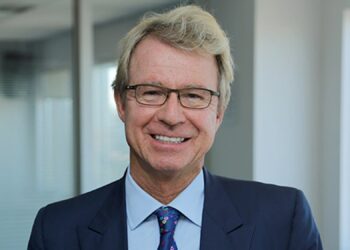
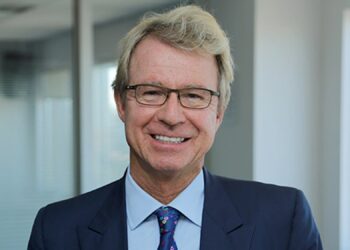
Hugh Young is the managing director of Aberdeen Asset Management.
Tags: ChairmanCredit SuisseFinancial CrisisGlobal Financial CrisisStock Market

Related Posts

Relative Return Insider: RBA holds, Fed cuts and Santa’s set to rally

by Staff
December 11, 2025

In this episode of Relative Return Insider, host Keith Ford and AMP chief economist Shane Oliver unpack the RBA’s decision...

Relative Return Insider: GDP rebounds and housing squeeze getting worse

by Staff Writer
December 5, 2025

In this episode of Relative Return Insider, host Keith Ford and AMP chief economist Shane Oliver discuss the September quarter...

The Manager Mix – Alternatives: Haley Devine of MaxCap Group

by Staff
December 5, 2025

In this new episode of The Manager Mix, host Laura Dew speaks to Haley Devine, head of wealth management at...

Leave a Reply Cancel reply

Your email address will not be published. Required fields are marked *

VIEW ALL
Promoted Content

Consistency is the most underrated investment strategy.

In financial markets, excitement drives headlines. Equity markets rise, fall, and recover — creating stories that capture attention. Yet sustainable...

by Industry Expert
November 5, 2025
Promoted Content

Jonathan Belz – Redefining APAC Access to US Private Assets

Winner of Executive of the Year – Funds Management 2025After years at Goldman Sachs and Credit Suisse, Jonathan Belz founded...

by Staff Writer
September 11, 2025
Promoted Content

Real-Time Settlement Efficiency in Modern Crypto Wealth Management

Cryptocurrency liquidity has become a cornerstone of sophisticated wealth management strategies, with real-time settlement capabilities revolutionizing traditional investment approaches. The...

by PartnerArticle
September 4, 2025
Editorial

Relative Return: How fixed income got its defensiveness back

In this episode of Relative Return, host Laura Dew chats with Roy Keenan, co-head of fixed income at Yarra Capital...

by Laura Dew
September 4, 2025

Join our newsletter

View our privacy policy, collection notice and terms and conditions to understand how we use your personal information.

Podcasts

Relative Return Insider: RBA holds, Fed cuts and Santa’s set to rally

December 11, 2025

Relative Return Insider: GDP rebounds and housing squeeze getting worse

December 5, 2025

Relative Return Insider: US shares rebound, CPI spikes and super investment

November 28, 2025

Relative Return Insider: Economic shifts, political crossroads, and the digital future

November 14, 2025

Relative Return: Helping Australians retire with confidence

November 11, 2025

Relative Return Insider: RBA holds rates steady amid inflation concerns

November 6, 2025

Top Performing Funds

FIXED INT - AUSTRALIA/GLOBAL BOND
Fund name
3 y p.a(%)
1
DomaCom DFS Mortgage
211.38
2
Loftus Peak Global Disruption Fund Hedged
110.90
3
SGH Income Trust Dis AUD
80.01
4
Global X 21Shares Bitcoin ETF
76.11
5
Smarter Money Long-Short Credit Investor USD
67.63
Money Management provides accurate, informative and insightful editorial coverage of the Australian financial services market, with topics including taxation, managed funds, property investments, shares, risk insurance, master trusts, superannuation, margin lending, financial planning, portfolio construction, and investment strategies.

Subscribe to our newsletter

View our privacy policy, collection notice and terms and conditions to understand how we use your personal information.

About Us

  • About
  • Advertise
  • Contact
  • Terms & Conditions
  • Privacy Collection Notice
  • Privacy Policy

Popular Topics

  • Financial Planning
  • Funds Management
  • Investment Insights
  • ETFs
  • People & Products
  • Policy & Regulation
  • Superannuation

© 2025 All Rights Reserved. All content published on this site is the property of Prime Creative Media. Unauthorised reproduction is prohibited

No Results
View All Results
NEWSLETTER
  • News
    • All News
    • Accounting
    • Financial Planning
    • Funds Management
    • Life/Risk
    • People & Products
    • Policy & Regulation
    • Property
    • SMSF
    • Superannuation
    • Tech
  • Investment
    • All Investment
    • Australian Equities
    • ETFs
    • Fixed Income
    • Global Equities
    • Managed Accounts
  • Features
    • All Features
    • Editorial
    • Expert Analysis
    • Guides
    • Outsider
    • Rate The Raters
    • Top 100
  • Media
    • Events
    • Podcast
    • Webcasts
  • Promoted Content
  • Investment Centre
  • Expert Resources
  • About
  • Advertise
  • Contact Us

© 2025 All Rights Reserved. All content published on this site is the property of Prime Creative Media. Unauthorised reproduction is prohibited