
X
  • About
  • Advertise
  • Contact
  • Expert Resources
Get the latest news! Subscribe to the Money Management bulletin
  • News
    • Accounting
    • Financial Planning
    • Funds Management
    • Life/Risk
    • People & Products
    • Policy & Regulation
    • Property
    • SMSF
    • Superannuation
    • Tech
  • Investment
    • Australian Equities
    • Global Equities
    • Managed Accounts
    • Fixed Income
    • ETFs
  • Features
    • Editorial
    • Expert Analysis
    • Guides
    • Outsider
    • Rate The Raters
    • Top 100
  • Media
    • Events
    • Podcast
    • Webcasts
  • Promoted Content
  • Investment Centre
No Results
View All Results
  • News
    • Accounting
    • Financial Planning
    • Funds Management
    • Life/Risk
    • People & Products
    • Policy & Regulation
    • Property
    • SMSF
    • Superannuation
    • Tech
  • Investment
    • Australian Equities
    • Global Equities
    • Managed Accounts
    • Fixed Income
    • ETFs
  • Features
    • Editorial
    • Expert Analysis
    • Guides
    • Outsider
    • Rate The Raters
    • Top 100
  • Media
    • Events
    • Podcast
    • Webcasts
  • Promoted Content
  • Investment Centre
No Results
View All Results
No Results
View All Results
Home Features Editorial

Keeping up appearances

by Liam Egan
September 29, 2005
in Editorial, Features
Reading Time: 5 mins read
Share on FacebookShare on Twitter

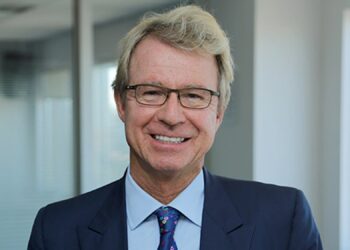
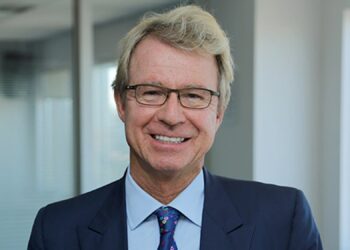
Few financial products have greater potential to tug at Australians’ emotions than reverse mortgages, according to Kieren Dell, executive director of the Senior Australian Equity Release Association of Lenders (Sequal).

“We’re talking about a product that includes property, senior citizens and inheritance in the mix,” Dell explains.

X

“These are all highly emotive issues for Australians. Beneficiaries, for example, need to know they’re not going to get an unencumbered property. There may well be a debt on it.”

Code of conduct

The emotive potential is a key reason why Sequal’s 10-point code of conduct “strongly encourages” borrowers to discuss the transaction with family members and seek advice from a qualified financial planner, Dell says.

In fact, the launch of Sequal itself in January this year is a result of the emotive potential of the product.

As an attempt at self-regulation, Sequal is modelled on the Safe Home Income Plans (SHIP). SHIP was formed to clean up the sector in the UK after adverse consumer experiences in the 1980s and early 1990s.

As house prices crashed and interest rates soared, people holding reverse mortgages found they owed more than their homes were worth. In a few cases, older people were evicted from their homes, with all the accompanying bad publicity for the products.

Five of an estimated 11 providers in the Australian market are currently members of Sequal, Dell says. Membership includes most of the major providers, with the notable exception of the Commonwealth Bank of Australia.

The remaining providers are a diverse group of specialist lenders, including both credit unions and major financial institutions.

“It’s not automatic to be a member of Sequal just because you offer a reverse mortgage,” says Dell, who predicts there will be “about 20 providers by this time next year”.

He adds: “Members have all agreed to abide by our code of conduct, and have all been certified to make sure they do so. Membership is a tick of approval saying they meet all of the requirements.”

As a measure of Sequal’s success, Dell says, financial planners and brokers are beginning to accept membership as a base level of comfort. “They’re saying they’ll only use Sequel members’ products.”

Another measure of success are the many requests the association receives from the distribution side to join Sequal. “This can’t happen, of course, because Sequal is an association of lenders, and we intend to keep it this way. However, we are currently working on endorsing planner education programs, as a way of satisfying demand.”

No negative equity

Product design and the advice/sales process are two key areas that the Sequel code of conduct covers. The no negative equity guarantee is the cornerstone of the code from the point of view of product design, says Dell.

“It’s an absolute must for Sequal membership because it’s at the heart of client confidence. It ensures they will never, in any circumstance, owe more than the value of the property.”

A lot of the code’s 10 points relate not so much to the product but to the advise/sales process, he says.

“How the advice is given is just as important as the product design process in terms of a code of conduct.

“For example, it’s an absolute requirement that every one who signs up for a reverse mortgage with a Sequal member must get independent legal advice. They are signing a mortgage contract, after all. They need to understand what their obligations are under that loan.”

There is also a strong recommendation that clients talk to Centrelink, “because you don’t want them to lose their pension through the process of taking out a reverse mortgage”.

Dell says he spoke to the Australian Securities and Investments Commission (ASIC) in the course of Sequal’s formation and it’s his understanding that ASIC sees self-regulation as a positive move, next to having no regulation. “But, of course, they also will want to keep an eye on the market.”

Adviser compliance

Sequal requires a very similar product and fee disclosure to that presented to clients under Financial Services Reform (FSR), he says, even though reverse mortgages are not financial services products, and therefore do not technically fall under the FSR regime.

The reason is a reverse mortgage is a loan, and as a loan it comes under the regulation of the uniform credit code, a set of state-based regulations, uniform across the nation.

“Even so, and this is where it starts to get a little bit murky, planners using reverse mortgages in a retirement income perspective will certainly have to comply with all the requirements of their licences. A planner giving advice will operate under not just FSRA [Financial Services Reform Act] but the Trade Practices Act, and a whole lot of other regulation,” he says.

In the final analysis, Dell says, planners and brokers still have to go through an accreditation process with the providers.

It’s the providers who are trying to control the standards, such as insisting on the provision for clients to get legal advice, because ultimately it is with them that the product risk lies.

In Dell’s opinion most providers are meeting Sequal’s code of conduct, whether they’re members of the organisation or not. But there are also products that are popping up that are not necessarily reverse mortgages, he says.

“There was one scheme, for example, where an organisation would buy the house upfront. The person would pay them a peppercorn rental each year in return for an income stream over 30 years. Now that product is flawed, in the sense that there is too much risk for the retiree that the organisation will go under and cannot keep making the payments,” Dell says.
Tags: Australian Securities And Investments CommissionComplianceExecutive DirectorFinancial Services ReformInterest RatesMortgageProperty

Related Posts

Relative Return Insider: MYEFO, US data and a 2025 wrap up

by Laura Dew
December 18, 2025

In this final episode of Relative Return Insider for 2025, host Keith Ford and AMP chief economist Shane Oliver wrap...

Relative Return Insider: RBA holds, Fed cuts and Santa’s set to rally

by Staff
December 11, 2025

In this episode of Relative Return Insider, host Keith Ford and AMP chief economist Shane Oliver unpack the RBA’s decision...

Relative Return Insider: GDP rebounds and housing squeeze getting worse

by Staff Writer
December 5, 2025

In this episode of Relative Return Insider, host Keith Ford and AMP chief economist Shane Oliver discuss the September quarter...

Leave a Reply Cancel reply

Your email address will not be published. Required fields are marked *

VIEW ALL
Promoted Content

Consistency is the most underrated investment strategy.

In financial markets, excitement drives headlines. Equity markets rise, fall, and recover — creating stories that capture attention. Yet sustainable...

by Industry Expert
November 5, 2025
Promoted Content

Jonathan Belz – Redefining APAC Access to US Private Assets

Winner of Executive of the Year – Funds Management 2025After years at Goldman Sachs and Credit Suisse, Jonathan Belz founded...

by Staff Writer
September 11, 2025
Promoted Content

Real-Time Settlement Efficiency in Modern Crypto Wealth Management

Cryptocurrency liquidity has become a cornerstone of sophisticated wealth management strategies, with real-time settlement capabilities revolutionizing traditional investment approaches. The...

by PartnerArticle
September 4, 2025
Editorial

Relative Return: How fixed income got its defensiveness back

In this episode of Relative Return, host Laura Dew chats with Roy Keenan, co-head of fixed income at Yarra Capital...

by Laura Dew
September 4, 2025

Join our newsletter

View our privacy policy, collection notice and terms and conditions to understand how we use your personal information.

Podcasts

Relative Return Insider: MYEFO, US data and a 2025 wrap up

December 18, 2025

Relative Return Insider: RBA holds, Fed cuts and Santa’s set to rally

December 11, 2025

Relative Return Insider: GDP rebounds and housing squeeze getting worse

December 5, 2025

Relative Return Insider: US shares rebound, CPI spikes and super investment

November 28, 2025

Relative Return Insider: Economic shifts, political crossroads, and the digital future

November 14, 2025

Relative Return: Helping Australians retire with confidence

November 11, 2025

Top Performing Funds

FIXED INT - AUSTRALIA/GLOBAL BOND
Fund name
3 y p.a(%)
1
DomaCom DFS Mortgage
211.38
2
Loftus Peak Global Disruption Fund Hedged
110.90
3
Global X 21Shares Bitcoin ETF
76.11
4
Smarter Money Long-Short Credit Investor USD
67.63
5
BetaShares Crypto Innovators ETF
62.68
Money Management provides accurate, informative and insightful editorial coverage of the Australian financial services market, with topics including taxation, managed funds, property investments, shares, risk insurance, master trusts, superannuation, margin lending, financial planning, portfolio construction, and investment strategies.

Subscribe to our newsletter

View our privacy policy, collection notice and terms and conditions to understand how we use your personal information.

About Us

  • About
  • Advertise
  • Contact
  • Terms & Conditions
  • Privacy Collection Notice
  • Privacy Policy

Popular Topics

  • Financial Planning
  • Funds Management
  • Investment Insights
  • ETFs
  • People & Products
  • Policy & Regulation
  • Superannuation

© 2025 All Rights Reserved. All content published on this site is the property of Prime Creative Media. Unauthorised reproduction is prohibited

No Results
View All Results
NEWSLETTER
  • News
    • All News
    • Accounting
    • Financial Planning
    • Funds Management
    • Life/Risk
    • People & Products
    • Policy & Regulation
    • Property
    • SMSF
    • Superannuation
    • Tech
  • Investment
    • All Investment
    • Australian Equities
    • ETFs
    • Fixed Income
    • Global Equities
    • Managed Accounts
  • Features
    • All Features
    • Editorial
    • Expert Analysis
    • Guides
    • Outsider
    • Rate The Raters
    • Top 100
  • Media
    • Events
    • Podcast
    • Webcasts
  • Promoted Content
  • Investment Centre
  • Expert Resources
  • About
  • Advertise
  • Contact Us

© 2025 All Rights Reserved. All content published on this site is the property of Prime Creative Media. Unauthorised reproduction is prohibited


