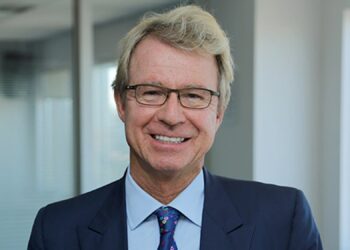
John Vail and Hiroki Tsujimura outline their assessment of Japan’s economic reforms and the implications these will have for Australian investors.
Less than a year after his election in December 2012, Japan’s Prime Minister Shinzo Abe’s economic reforms appear to have provided the stimulus to declare Japan ‘open for business’.
Abe wasted no time in introducing unprecedented monetary and fiscal reforms, dubbed ‘Abenomics’. After the July landslide in the upper house John Vail, chief global strategist for Nikko AM, upgraded ‘Abenomics’ to ‘Super-Abenomics’.
Vail, who has spent almost 25 years working in Asia, the last seven with Nikko AM, says “this is a very different experience than I’ve ever witnessed.
The unanimity of all the different parties in Japan towards economic reform has not been seen previously.
“There were few conditions under which the Japanese were united behind anything. It really is a different experience this time … the reflation sentiment is completely new, the BoJ [Bank of Japan] governorship and his strategy are completely new to Japan and it is not going away.
“This is not something that is going to disappear in the next month or six months or even 12 months. It is going to be a multi-year phenomenon.”
The reforms are based on a ‘three arrows’ strategy: Setting a target of 2 per cent inflation to support a target of 2 per cent real GDP growth (4 per cent nominal growth); an expansionary fiscal policy on public works; and a growth strategy for private investment.
The provenance of ‘three arrows’ is based on the legendary tale of Mori Motonari, a Samurai warrior who lived during 16th century Japan at a time of constant political and military conflict.
Motonari had three sons whom he convinced to work together for the survival of the Mori clan. It is unknown whether it actually happened or is an apocryphal portrayal, but Motonari gave each of his sons an arrow and asked them to snap it, which they easily did.
He then produced three arrows held together, which they were unable to snap. And so, the idea that ‘three arrows cannot be broken’, became legendary.
Abe’s reforms may also prove to be legendary.
Initial reactions were positive, but scepticism remained on implementation. According to The Economist, the announcement in April by the BoJ to “hoover-up” 7 trillion yen (US$ 68 billion) of government bonds a month and double the base, had the opposite effect and revived fears of the value-at-risk shock of 2003.
However, according to Vail, that was a blip in what is an otherwise resolute strategy by the Prime Minister.
The value-at-risk shock of 2003 was a very different environment and it derived from technical issues, including governance and risk factors, which led to massive selling of the JGB and its sharp rise.
“The events in April were not due to technical issues but miscommunication issues. Prime Minister Abe wasted no time in addressing the issues to calm fears,” says Hiroki Tsujimura, Nikko AM’s chief investment officer, Japan.
According to Tsujimura, political instability has been one of Japan’s main problems. Over the past two decades, Japan changed Prime Ministers 15 times, which meant an average serving time of 1.3 years.
“If private companies changed CEOs 15 times in 20 years, it is highly likely they (the companies) would go bankrupt,” Tsujimura says.
Abe not only has the ruling majority and a decisive mandate to implement the reforms but his approval rating continues at 65 per cent, which has never been seen before.
According to Vail, that ensures “bureaucrats or anyone who resists doing anything new is going to be over-ruled because they are going to be too afraid, they will be criticised if they try to block it”.
Tsujimura agrees that Japan is on the comeback and there have been no clearer signs of this than the unveiling of such reforms to shift the mindset from deflation to inflation. The last time inflation rates were above 2 per cent was in 2008 – and that lasted three months.
“Governor Haruhiko Kuroda gave us a strong commitment. CPI 2 per cent in target within two years, that is his goal. To achieve that goal BoJ will do whatever is necessary. I have never heard such strong commitment in the past. And nobody heard such strong commitment from BoJ in the past,” Tsujimura says.
Since the unveiling of ‘Abenomics’, the narrative has been consistent from all quarters in Japan and, in a recent speech to the NYSE, Abe declared that his structural reforms were on track and he is ready to fire the third arrow – a growth strategy to complement the first two in more depth.
According to Vail, there are already tangible successes. The CPI, which is near 1 per cent, is clearly a success of the ‘first arrow’ – and the yen, which has been debilitating for the Japanese, has finally headed south.
“PCE, residential construction and exports (which include tourist spending in Japan due to the weak yen) have rebounded, while capex is recovering too. Few would complain about the 4 per cent QoQ GDP growth rates since the new government took office,” Vail says.
He cited other KPIs including an increase in wages and bonuses, as well as consumption.
The third arrow strategy is an interesting tactical approach.
The Japanese government introduced the Nippon Individual Savings Account, or NISA, a tax-exempt investment (which comes into effect in April 2014) as a measure to move, as Tsujimura points out, “the tons of cash” in the grip of the Japanese, both personal and corporate.
Japanese personal financial assets total US 16 trillion. More than half is cash and “60 per cent of US$8.5 trillion cash is held by those over the age of 60,” says Tsujimura.
“This is one of the keys, because these people know inflation and bubble periods, which mean they know how to spend money or know how to protect their financial asset once inflation comes. The corporations have over US$2 trillion cash. So how Abe wants to use that cash to stimulate the economy, that’s the point.”
Overall, there are positive signs not just for Japan but the global equity markets, and expectations are that the MSCI world Total Return Index will increase 4 per cent by March 2014. Both Vail and Tsujimura have a sturdy view for the next months and say we can expect a modest level of growth.
“The US is continuing with a fairly decent set of economic growth despite the recent short-term problems we’ve been experiencing. Europe is on a gradual ascent from its debts.
"We’ve got China continuing to grow at a decent rate, and in Japan we have a sturdy 4 per cent growth rate annualised for the next few quarters – 2 per cent growth this year and 2 per cent next year. But no doubt Japan will surpass expectations,” says Vail.
Myth or not the, “Three arrows cannot be broken”, or “san bon no ya nara orenai” is embedded in the Japanese vernacular. The English equivalent is Aristotle’s “the whole is greater than the sum of its parts”.
Both are metaphors for harmony, unity, strength, teamwork or synergy and no doubt Abe’s revival of the term is intended for a bullish response rather than the sentimental one that has endured for decades. And that is more likely to happen than not.
John Vail is the chief global strategist and Hiroki Tsujimura is chief investment officer at Nikko Asset Management.