X
  • About
  • Advertise
  • Contact
  • Expert Resources
Get the latest news! Subscribe to the Money Management bulletin
  • News
    • Accounting
    • Financial Planning
    • Funds Management
    • Life/Risk
    • People & Products
    • Policy & Regulation
    • Property
    • SMSF
    • Superannuation
    • Tech
  • Investment
    • Australian Equities
    • Global Equities
    • Managed Accounts
    • Fixed Income
    • ETFs
  • Features
    • Editorial
    • Expert Analysis
    • Guides
    • Outsider
    • Rate The Raters
    • Top 100
  • Media
    • Events
    • Podcast
    • Webcasts
  • Promoted Content
  • Investment Centre
No Results
View All Results
  • News
    • Accounting
    • Financial Planning
    • Funds Management
    • Life/Risk
    • People & Products
    • Policy & Regulation
    • Property
    • SMSF
    • Superannuation
    • Tech
  • Investment
    • Australian Equities
    • Global Equities
    • Managed Accounts
    • Fixed Income
    • ETFs
  • Features
    • Editorial
    • Expert Analysis
    • Guides
    • Outsider
    • Rate The Raters
    • Top 100
  • Media
    • Events
    • Podcast
    • Webcasts
  • Promoted Content
  • Investment Centre
No Results
View All Results
No Results
View All Results
Home Features

Investing to cope with all seasons – Retirement Income Part 2

A burgeoning ageing population and a low global interest rate environment means investors will need to diversify and avoid overexposure to banks to avoid running out of savings, Jessica Amir writes.

by Staff Writer
June 17, 2016
in Features
Reading Time: 4 mins read
Share on FacebookShare on Twitter

A quarter of Australians will be over the age of 65 in 2041, so they need to invest carefully to make their money last throughout their retirement, particularly amid the low global interest rates, according to Perpetual Private.

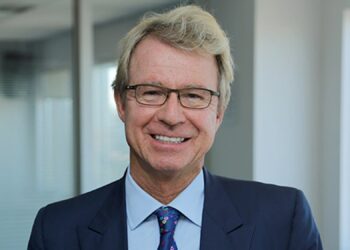
General manager of product and investments, Jason Komadina, said with that in mind, diversification was a client’s best friend.

X

He said his firm had been focussing on the “types of assets that were less linked to markets, less affected by volatility and provided better returns over the longer term”.

Over the past five years they had been advising clients to invest up to 20 per cent of their portfolios in alternatives.

This included investments in private equity, real property, private debt, infrastructure, and property debt investments, Komadina said.

Assess and adapt

State Street Global Advisors’ head of asset allocation, Mark Willis, said advisers needed to get their clients to adapt to the current climate, by cutting back on how much they lived on and avoid bank exposure.

“It’s unpleasant, but clients have to adapt to their risk profiles or cut back on what they live on… either take risk on, or cut back,” Willis said.

He added that retirees should be mindful that the big four really do the same thing and are exposed to similar levels of risk.

“A lot of clients have managed funds, ETFs [exchange traded funds], and single shares. But they could be loading up their bank exposure quite heavily. They need to focus on what exposure you have at the total portfolio level,” he said.

AllianceBerstein’s chief investment officer, Roy Maslen, also warned retirees of overexposure to banks.

He said retirees needed to get out of their comfort zones “as equities were yielding more than bonds, they needed to look beyond the standard big allocation of fixed-income, term deposits, and cash.

ETFs

Another huge trend that had emerged was that more clients were investing their retirement nest eggs into exchange traded funds (ETFs) that were risk managed, according to BetaShares.

The Australian ETF provider said its portfolio of managed risk funds was set up to preserve clients’ capital, provide a stable income, low volatility, and low fees to clients.

Managing director, Alex Vynokur, said that was why their managed risk series of ETFs doubled over the past 12 months to $230 million, with 75 per cent of inflows coming from retirees.

“At the core of clients’ portfolios you need to have a combination of defensive equity investments, or managed risk investments and cash. And that’s what advisers should focus on,” he said.

Engagement and education needed for retirement

Global advisory group, Willis Towers Watson, said the fundamental problem of retirement income was that people were simply not saving enough to retire, but businesses could close that gap by engaging their workforce.

Head of retirement solutions, Nick Callil, said: “There is a lot of focus on the back end, how to stretch money over a time frame, the products and the regulatory environment. But before you get there, there is definitely an issue that our level of saving is not enough”.

He said the superannuation guarantee (SG) was not sufficient for Australians to become self-reliant and relieve the burden on the Age Pension.

Callil said engagement at the employment level, education from fund providers, and having people in better paid jobs (so they could contribute to super after they had paid their living expenses) would help.

In my own experience I felt that school education could also play a role.

In years 11 and 12 I was part of the employed youth population – like 63 per cent of 15-to-24-year-olds, according to the Australian Bureau of Statistics (ABS).

That meant I received superannuation statements in the post, yet I was not taught what superannuation was.

It was not part of the school syllabus. But, I was interestingly taught how the economy operated and how to draw up a business’ profit and loss statement.

Superannuation remained a grey area of my life until I decided to take matters in to my own hands, and studied to become a financial planner.

Deloitte partner, Russell Mason, said this lack of early education was reflected in the fact that lot of people did not even know what super fund they were in.

According to Sunsuper, 72 per of Australians did not know what the SG rate was.

The ABS found that financial security is the main reason people would work longer.

The ABS said almost a quarter of Australians aged 45 and over (23 per cent) intend to retire at the age of 70 (or over), compared to just eight per cent who planned to work to 70 in 2004-2005.

However, the majority of those over 45 said they planned to retire between the ages of 65 and 69.

Mason said if there was a concerted drive to increase financial literacy at school, with the government introducing compulsory financial services education, people could make better informed decision throughout their lives, and this could help close the retirement income gap.

Read part one of this feature: Travelling an unfinished road to Retirement

Tags: EducationFinancial LiteracyFinancial PlanningInvestmentRetirement

Related Posts

Relative Return Insider: MYEFO, US data and a 2025 wrap up

by Laura Dew
December 18, 2025

In this final episode of Relative Return Insider for 2025, host Keith Ford and AMP chief economist Shane Oliver wrap...

Relative Return Insider: RBA holds, Fed cuts and Santa’s set to rally

by Staff
December 11, 2025

In this episode of Relative Return Insider, host Keith Ford and AMP chief economist Shane Oliver unpack the RBA’s decision...

Relative Return Insider: GDP rebounds and housing squeeze getting worse

by Staff Writer
December 5, 2025

In this episode of Relative Return Insider, host Keith Ford and AMP chief economist Shane Oliver discuss the September quarter...

Leave a Reply Cancel reply

Your email address will not be published. Required fields are marked *

VIEW ALL
Promoted Content

Consistency is the most underrated investment strategy.

In financial markets, excitement drives headlines. Equity markets rise, fall, and recover — creating stories that capture attention. Yet sustainable...

by Industry Expert
November 5, 2025
Promoted Content

Jonathan Belz – Redefining APAC Access to US Private Assets

Winner of Executive of the Year – Funds Management 2025After years at Goldman Sachs and Credit Suisse, Jonathan Belz founded...

by Staff Writer
September 11, 2025
Promoted Content

Real-Time Settlement Efficiency in Modern Crypto Wealth Management

Cryptocurrency liquidity has become a cornerstone of sophisticated wealth management strategies, with real-time settlement capabilities revolutionizing traditional investment approaches. The...

by PartnerArticle
September 4, 2025
Editorial

Relative Return: How fixed income got its defensiveness back

In this episode of Relative Return, host Laura Dew chats with Roy Keenan, co-head of fixed income at Yarra Capital...

by Laura Dew
September 4, 2025

Join our newsletter

View our privacy policy, collection notice and terms and conditions to understand how we use your personal information.

Podcasts

Relative Return Insider: MYEFO, US data and a 2025 wrap up

December 18, 2025

Relative Return Insider: RBA holds, Fed cuts and Santa’s set to rally

December 11, 2025

Relative Return Insider: GDP rebounds and housing squeeze getting worse

December 5, 2025

Relative Return Insider: US shares rebound, CPI spikes and super investment

November 28, 2025

Relative Return Insider: Economic shifts, political crossroads, and the digital future

November 14, 2025

Relative Return: Helping Australians retire with confidence

November 11, 2025

Top Performing Funds

FIXED INT - AUSTRALIA/GLOBAL BOND
Fund name
3 y p.a(%)
1
DomaCom DFS Mortgage
211.38
2
Loftus Peak Global Disruption Fund Hedged
110.90
3
SGH Income Trust Dis AUD
80.01
4
Global X 21Shares Bitcoin ETF
76.11
5
Smarter Money Long-Short Credit Investor USD
67.63
Money Management provides accurate, informative and insightful editorial coverage of the Australian financial services market, with topics including taxation, managed funds, property investments, shares, risk insurance, master trusts, superannuation, margin lending, financial planning, portfolio construction, and investment strategies.

Subscribe to our newsletter

View our privacy policy, collection notice and terms and conditions to understand how we use your personal information.

About Us

  • About
  • Advertise
  • Contact
  • Terms & Conditions
  • Privacy Collection Notice
  • Privacy Policy

Popular Topics

  • Financial Planning
  • Funds Management
  • Investment Insights
  • ETFs
  • People & Products
  • Policy & Regulation
  • Superannuation

© 2025 All Rights Reserved. All content published on this site is the property of Prime Creative Media. Unauthorised reproduction is prohibited

No Results
View All Results
NEWSLETTER
  • News
    • All News
    • Accounting
    • Financial Planning
    • Funds Management
    • Life/Risk
    • People & Products
    • Policy & Regulation
    • Property
    • SMSF
    • Superannuation
    • Tech
  • Investment
    • All Investment
    • Australian Equities
    • ETFs
    • Fixed Income
    • Global Equities
    • Managed Accounts
  • Features
    • All Features
    • Editorial
    • Expert Analysis
    • Guides
    • Outsider
    • Rate The Raters
    • Top 100
  • Media
    • Events
    • Podcast
    • Webcasts
  • Promoted Content
  • Investment Centre
  • Expert Resources
  • About
  • Advertise
  • Contact Us

© 2025 All Rights Reserved. All content published on this site is the property of Prime Creative Media. Unauthorised reproduction is prohibited