X
  • About
  • Advertise
  • Contact
  • Expert Resources
Get the latest news! Subscribe to the Money Management bulletin
  • News
    • Accounting
    • Financial Planning
    • Funds Management
    • Life/Risk
    • People & Products
    • Policy & Regulation
    • Property
    • SMSF
    • Superannuation
    • Tech
  • Investment
    • Australian Equities
    • Global Equities
    • Managed Accounts
    • Fixed Income
    • ETFs
  • Features
    • Editorial
    • Expert Analysis
    • Guides
    • Outsider
    • Rate The Raters
    • Top 100
  • Media
    • Events
    • Podcast
    • Webcasts
  • Promoted Content
  • Investment Centre
No Results
View All Results
  • News
    • Accounting
    • Financial Planning
    • Funds Management
    • Life/Risk
    • People & Products
    • Policy & Regulation
    • Property
    • SMSF
    • Superannuation
    • Tech
  • Investment
    • Australian Equities
    • Global Equities
    • Managed Accounts
    • Fixed Income
    • ETFs
  • Features
    • Editorial
    • Expert Analysis
    • Guides
    • Outsider
    • Rate The Raters
    • Top 100
  • Media
    • Events
    • Podcast
    • Webcasts
  • Promoted Content
  • Investment Centre
No Results
View All Results
No Results
View All Results
Home Features Editorial

Big, bigger, biggest

by Mike Taylor
May 1, 2006
in Editorial, Features
Reading Time: 4 mins read
Share on FacebookShare on Twitter

More than 30 funds have disappeared from the landscape as a result of mergers and corporate superannuation outsourcing over the past 12 months, but the impact of those changes will be dwarfed by the impact of the merger between the Superannuation Trust of Australia (STA) and the Australian Retirement Fund (ARF).

What emerges from the ARF/STA merger will be a fund that boasts 1.1 million members and more than $18 billion in funds under management.

X

That will not make it the largest fund in terms of absolute member numbers in circumstances where REST boasts more than 1.5 million members, but with $18 billion in assets under management it is arguably a standout in the not-for-profit sector.

But a question that must be answered is why two very large and successful funds such as the ARF and STA would choose to merge when, arguably, they had the resources and the reputation to continue as stand alone entities.

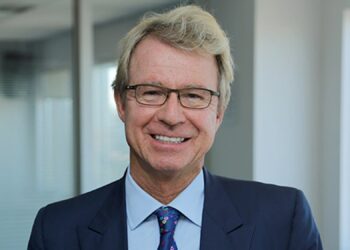
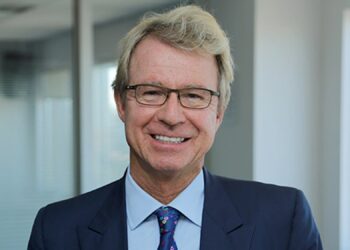
What becomes evident in speaking to the man who will oversee the new merged entity, ARF chief executive Ian Silk, is that unlike many of the other superannuation fund mergers that have taken place in Australia over the past three years, the ARF/STA marriage has a very different motivation.

For a start, neither fund was particularly challenged with respect to the new choice of superannuation fund regime or gaining their Registrable Superannuation Entity licences.

“By any objective test, it is true to say that STA and ARF are two pretty large and good quality funds, with excellent reputations with most of the major ratings agencies,” Silk said. “The funds could have easily continued to stand alone, but the merger decision was based on a dispassionate assessment of what would ultimately be good for members.”

In truth, the decision to merge the two funds has represented a long and exacting exercise for the trustee boards of both entities, with the initial merger proposal flagged more than 18 months ago and the extended due diligence process only being finalised earlier this year.

The STA and ARF represent cornerstones of the industry funds movement and it is not without significance that their merger is taking place at a time when Industry Funds Management is moving closer to completing an integration with the Super Fund’s Back Member’s Equity.

According to Silk, the primary benefit for members of the STA and ARF likely to flow from the merger is an improved range of products and services — something that flows from the greater influence the combined entity will be able to wield in the marketplace.

“We are now operating in an increasingly competitive industry and that requires that we build a competitive brand,” he said.

But don’t expect the new ARF/STA entity to begin marketing itself as something new or different. According to Silk, the merged entity will continue to position itself as an industry superannuation fund and exhibit all the normal characteristics of an industry fund in terms of a not-for-profit philosophy and low fees to members.

It would, he said, continue to participate with other funds in supporting Member’s Equity and Industry Funds Management, although it was expected that certain benefits would flow as a result of the fund’s size and buying power.

One of the first of those benefits will flow through to members of the two funds within months, with a new insurance contract having been negotiated aimed at delivering a greater range of options and significant benefits in terms of dollar premiums.

Silk has also signalled that the combined entity will be in the business of developing new offerings such as retirement-related products.

However, he said the bottom line with respect to the combined entity would be the delivery of solid investment returns.

“Members are happy to have a wider range of products and services but, ultimately, they demand a solid investment performance,” Silk said.

And for those who think the merger of the ARF and STA reflect a view that big is better, Silk has a very clear message: “The suggestion that size is everything is very superficial.”

“Size of itself does not deliver benefits,” he said. “It is the way in which a fund is managed.”
Tags: Chief ExecutiveInsuranceSuper FundSuperannuation FundTrustee

Related Posts

Relative Return Insider: MYEFO, US data and a 2025 wrap up

by Laura Dew
December 18, 2025

In this final episode of Relative Return Insider for 2025, host Keith Ford and AMP chief economist Shane Oliver wrap...

Relative Return Insider: RBA holds, Fed cuts and Santa’s set to rally

by Staff
December 11, 2025

In this episode of Relative Return Insider, host Keith Ford and AMP chief economist Shane Oliver unpack the RBA’s decision...

Relative Return Insider: GDP rebounds and housing squeeze getting worse

by Staff Writer
December 5, 2025

In this episode of Relative Return Insider, host Keith Ford and AMP chief economist Shane Oliver discuss the September quarter...

Leave a Reply Cancel reply

Your email address will not be published. Required fields are marked *

VIEW ALL
Promoted Content

Consistency is the most underrated investment strategy.

In financial markets, excitement drives headlines. Equity markets rise, fall, and recover — creating stories that capture attention. Yet sustainable...

by Industry Expert
November 5, 2025
Promoted Content

Jonathan Belz – Redefining APAC Access to US Private Assets

Winner of Executive of the Year – Funds Management 2025After years at Goldman Sachs and Credit Suisse, Jonathan Belz founded...

by Staff Writer
September 11, 2025
Promoted Content

Real-Time Settlement Efficiency in Modern Crypto Wealth Management

Cryptocurrency liquidity has become a cornerstone of sophisticated wealth management strategies, with real-time settlement capabilities revolutionizing traditional investment approaches. The...

by PartnerArticle
September 4, 2025
Editorial

Relative Return: How fixed income got its defensiveness back

In this episode of Relative Return, host Laura Dew chats with Roy Keenan, co-head of fixed income at Yarra Capital...

by Laura Dew
September 4, 2025

Join our newsletter

View our privacy policy, collection notice and terms and conditions to understand how we use your personal information.

Podcasts

Relative Return Insider: MYEFO, US data and a 2025 wrap up

December 18, 2025

Relative Return Insider: RBA holds, Fed cuts and Santa’s set to rally

December 11, 2025

Relative Return Insider: GDP rebounds and housing squeeze getting worse

December 5, 2025

Relative Return Insider: US shares rebound, CPI spikes and super investment

November 28, 2025

Relative Return Insider: Economic shifts, political crossroads, and the digital future

November 14, 2025

Relative Return: Helping Australians retire with confidence

November 11, 2025

Top Performing Funds

FIXED INT - AUSTRALIA/GLOBAL BOND
Fund name
3 y p.a(%)
1
DomaCom DFS Mortgage
211.38
2
Loftus Peak Global Disruption Fund Hedged
110.90
3
SGH Income Trust Dis AUD
80.01
4
Global X 21Shares Bitcoin ETF
76.11
5
Smarter Money Long-Short Credit Investor USD
67.63
Money Management provides accurate, informative and insightful editorial coverage of the Australian financial services market, with topics including taxation, managed funds, property investments, shares, risk insurance, master trusts, superannuation, margin lending, financial planning, portfolio construction, and investment strategies.

Subscribe to our newsletter

View our privacy policy, collection notice and terms and conditions to understand how we use your personal information.

About Us

  • About
  • Advertise
  • Contact
  • Terms & Conditions
  • Privacy Collection Notice
  • Privacy Policy

Popular Topics

  • Financial Planning
  • Funds Management
  • Investment Insights
  • ETFs
  • People & Products
  • Policy & Regulation
  • Superannuation

© 2025 All Rights Reserved. All content published on this site is the property of Prime Creative Media. Unauthorised reproduction is prohibited

No Results
View All Results
NEWSLETTER
  • News
    • All News
    • Accounting
    • Financial Planning
    • Funds Management
    • Life/Risk
    • People & Products
    • Policy & Regulation
    • Property
    • SMSF
    • Superannuation
    • Tech
  • Investment
    • All Investment
    • Australian Equities
    • ETFs
    • Fixed Income
    • Global Equities
    • Managed Accounts
  • Features
    • All Features
    • Editorial
    • Expert Analysis
    • Guides
    • Outsider
    • Rate The Raters
    • Top 100
  • Media
    • Events
    • Podcast
    • Webcasts
  • Promoted Content
  • Investment Centre
  • Expert Resources
  • About
  • Advertise
  • Contact Us

© 2025 All Rights Reserved. All content published on this site is the property of Prime Creative Media. Unauthorised reproduction is prohibited