X
  • About
  • Advertise
  • Contact
  • Expert Resources
Get the latest news! Subscribe to the Money Management bulletin
  • News
    • Accounting
    • Financial Planning
    • Funds Management
    • Life/Risk
    • People & Products
    • Policy & Regulation
    • Property
    • SMSF
    • Superannuation
    • Tech
  • Investment
    • Australian Equities
    • Global Equities
    • Managed Accounts
    • Fixed Income
    • ETFs
  • Features
    • Editorial
    • Expert Analysis
    • Guides
    • Outsider
    • Rate The Raters
    • Top 100
  • Media
    • Events
    • Podcast
    • Webcasts
  • Promoted Content
  • Investment Centre
No Results
View All Results
  • News
    • Accounting
    • Financial Planning
    • Funds Management
    • Life/Risk
    • People & Products
    • Policy & Regulation
    • Property
    • SMSF
    • Superannuation
    • Tech
  • Investment
    • Australian Equities
    • Global Equities
    • Managed Accounts
    • Fixed Income
    • ETFs
  • Features
    • Editorial
    • Expert Analysis
    • Guides
    • Outsider
    • Rate The Raters
    • Top 100
  • Media
    • Events
    • Podcast
    • Webcasts
  • Promoted Content
  • Investment Centre
No Results
View All Results
No Results
View All Results
Home Features Editorial

Are double-digit returns sustainable?

by Mike Taylor
February 22, 2006
in Editorial, Features
Reading Time: 5 mins read
Share on FacebookShare on Twitter

Could 2006 be the year of superannuation? Last year was meant to be with the introduction of super choice, but so far that issue doesn’t seem to have gone a great distance.

The super choice issue of 2005 will be a slow-burning fuse and I am not expecting a great deal more to happen on that topic in the year ahead.

X

Of course, the big news of 2005, and unlikely to be carried on in 2006, is double-digit returns. It seems highly unlikely that funds can chalk-up four years in a row of bumper returns — but we have been saying that for the past two years at least.

It seems unlikely that it will happen again in 2006, but let’s not discount it. If the US economy gets going, China drives on, and a few other economic events occur around the world — why not another year of solid growth?

A slowdown in returns could be a two-edged sword for the industry. Those who have changed funds might find that the grass is not necessarily greener and start making a lot of noise, while others might decide that it now makes sense to change.

Watch this space on that one.

However, 2006 could be the year of superannuation for two other key reasons. The Australian Labor Party kicked one ball into play in January with suggestions of an overhaul of super taxes. The industry, through the Investment and Financial Services Association, the Association of Superannuation Funds of Australia, and others, have long been calling for the removal of some, or all, of the taxes imposed on superannuation savings that now exist.

It is taxed on the way in, taxed on its earnings, and then taxed on the way out. The end result is money in government coffers now, but reduced superannuation nest eggs later on. This tax structure works against getting people off the pension and creating more self-funded retirees.

If governments really wanted to encourage more people to save and become self-funded retirees, then simplifying the tax system would be a good place to start. Let’s hope the Federal Budget in May sets us off on a good path to that end. The budget surplus could be put to good use in this respect.

By May, we should also see more of the other big super issue this year — licensing of trustees. TOWER went at it early and, in January, was one of the first to be granted its Regulated Superannuation Entity (RSE) licence. Several other big funds have followed.

But getting an RSE is a big hurdle to jump in meeting the Australian Prudential Regulation Authority’s compliance standards, so it will be interesting to see which funds, come May, are opting out. By that time, those funds that have decided to not get licences will be seeking alternative trustee arrangements — that could be very interesting.

Returning to the issue of super choice for a moment, there is one ‘sleeper’ of an issue that may erupt this year, and it is one that needs to be watched closely by both investors and advisers.

Those who have opted to exercise choice, or been advised to exercise choice, should have paid close attention to their in-super life insurance. Those who haven’t followed up on this issue could find themselves considerably worse off as a result, while advisers who failed to properly deal with it are likely to strike trouble with the Australian Securities and Investments Commission.

How many people are cancelling life cover in one fund before being accepted by a new fund? These people could find themselves uninsurable and without any cover at all. Advisers will need to hang onto their professional indemnity hat if that happens.

The levels of in-super life coverage is also a big issue, and likely to be bigger this year as the nation continues to grapple with the problem of underinsurance. Super trustees of group schemes appear to have a duty to make sure their members are properly protected in all circumstances and the existing arrangements are clearly not adequate.

With the average mortgage now around $200,000, super life coverage at the traditional level leaves a big debt to be taken on by any family should the worst happen to the primary breadwinner.

And the other big issue for the year ahead is clearly going to be moves to make Financial Services Reform (FSR) even more consumer friendly.

We have now had FSR for two years and there have been changes. Changes to the terms of Statements of Advice (SOAs) and changes to when SOAs are required are all welcome. But some people are still missing out on advice because they can’t afford it or the adviser can’t afford the time and regulatory burden to deal with an often small amount.

This defeats the initial aim of FSR — to make financial services more accessible and accountable to the consumer. It is an unfortunate fact that the consumer is paying for FSR — the cost of compliance is either being directly put on the cost of service or indirectly by preventing open competition on fees and charges.

At the moment, the costs of FSR are probably slightly outweighing the benefits so hopefully, with some more changes in 2006, that balance will shift.

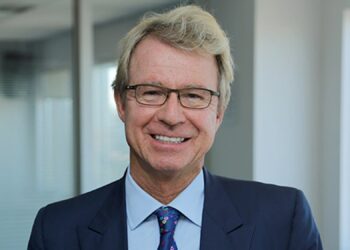
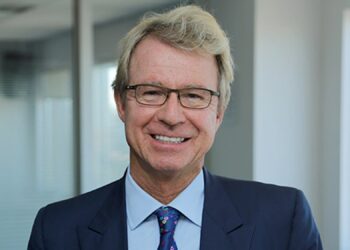
Grahame Evans is chief executive officer of TOWER Australia Investments
Tags: Australian Prudential Regulation AuthorityAustralian Securities And Investments CommissionChief Executive OfficerComplianceFinancial Services AssociationInsuranceLife InsuranceMortgageProfessional IndemnityTrustee

Related Posts

Relative Return Insider: MYEFO, US data and a 2025 wrap up

by Laura Dew
December 18, 2025

In this final episode of Relative Return Insider for 2025, host Keith Ford and AMP chief economist Shane Oliver wrap...

Relative Return Insider: RBA holds, Fed cuts and Santa’s set to rally

by Staff
December 11, 2025

In this episode of Relative Return Insider, host Keith Ford and AMP chief economist Shane Oliver unpack the RBA’s decision...

Relative Return Insider: GDP rebounds and housing squeeze getting worse

by Staff Writer
December 5, 2025

In this episode of Relative Return Insider, host Keith Ford and AMP chief economist Shane Oliver discuss the September quarter...

Leave a Reply Cancel reply

Your email address will not be published. Required fields are marked *

VIEW ALL
Promoted Content

Consistency is the most underrated investment strategy.

In financial markets, excitement drives headlines. Equity markets rise, fall, and recover — creating stories that capture attention. Yet sustainable...

by Industry Expert
November 5, 2025
Promoted Content

Jonathan Belz – Redefining APAC Access to US Private Assets

Winner of Executive of the Year – Funds Management 2025After years at Goldman Sachs and Credit Suisse, Jonathan Belz founded...

by Staff Writer
September 11, 2025
Promoted Content

Real-Time Settlement Efficiency in Modern Crypto Wealth Management

Cryptocurrency liquidity has become a cornerstone of sophisticated wealth management strategies, with real-time settlement capabilities revolutionizing traditional investment approaches. The...

by PartnerArticle
September 4, 2025
Editorial

Relative Return: How fixed income got its defensiveness back

In this episode of Relative Return, host Laura Dew chats with Roy Keenan, co-head of fixed income at Yarra Capital...

by Laura Dew
September 4, 2025

Join our newsletter

View our privacy policy, collection notice and terms and conditions to understand how we use your personal information.

Podcasts

Relative Return Insider: MYEFO, US data and a 2025 wrap up

December 18, 2025

Relative Return Insider: RBA holds, Fed cuts and Santa’s set to rally

December 11, 2025

Relative Return Insider: GDP rebounds and housing squeeze getting worse

December 5, 2025

Relative Return Insider: US shares rebound, CPI spikes and super investment

November 28, 2025

Relative Return Insider: Economic shifts, political crossroads, and the digital future

November 14, 2025

Relative Return: Helping Australians retire with confidence

November 11, 2025

Top Performing Funds

FIXED INT - AUSTRALIA/GLOBAL BOND
Fund name
3 y p.a(%)
1
DomaCom DFS Mortgage
211.38
2
Loftus Peak Global Disruption Fund Hedged
110.90
3
SGH Income Trust Dis AUD
80.01
4
Global X 21Shares Bitcoin ETF
76.11
5
Smarter Money Long-Short Credit Investor USD
67.63
Money Management provides accurate, informative and insightful editorial coverage of the Australian financial services market, with topics including taxation, managed funds, property investments, shares, risk insurance, master trusts, superannuation, margin lending, financial planning, portfolio construction, and investment strategies.

Subscribe to our newsletter

View our privacy policy, collection notice and terms and conditions to understand how we use your personal information.

About Us

  • About
  • Advertise
  • Contact
  • Terms & Conditions
  • Privacy Collection Notice
  • Privacy Policy

Popular Topics

  • Financial Planning
  • Funds Management
  • Investment Insights
  • ETFs
  • People & Products
  • Policy & Regulation
  • Superannuation

© 2025 All Rights Reserved. All content published on this site is the property of Prime Creative Media. Unauthorised reproduction is prohibited

No Results
View All Results
NEWSLETTER
  • News
    • All News
    • Accounting
    • Financial Planning
    • Funds Management
    • Life/Risk
    • People & Products
    • Policy & Regulation
    • Property
    • SMSF
    • Superannuation
    • Tech
  • Investment
    • All Investment
    • Australian Equities
    • ETFs
    • Fixed Income
    • Global Equities
    • Managed Accounts
  • Features
    • All Features
    • Editorial
    • Expert Analysis
    • Guides
    • Outsider
    • Rate The Raters
    • Top 100
  • Media
    • Events
    • Podcast
    • Webcasts
  • Promoted Content
  • Investment Centre
  • Expert Resources
  • About
  • Advertise
  • Contact Us

© 2025 All Rights Reserved. All content published on this site is the property of Prime Creative Media. Unauthorised reproduction is prohibited