X
  • About
  • Advertise
  • Contact
  • Expert Resources
Get the latest news! Subscribe to the Money Management bulletin
  • News
    • Accounting
    • Financial Planning
    • Funds Management
    • Life/Risk
    • People & Products
    • Policy & Regulation
    • Property
    • SMSF
    • Superannuation
    • Tech
  • Investment
    • Australian Equities
    • Global Equities
    • Managed Accounts
    • Fixed Income
    • ETFs
  • Features
    • Editorial
    • Expert Analysis
    • Guides
    • Outsider
    • Rate The Raters
    • Top 100
  • Media
    • Events
    • Podcast
    • Webcasts
  • Promoted Content
  • Investment Centre
No Results
View All Results
  • News
    • Accounting
    • Financial Planning
    • Funds Management
    • Life/Risk
    • People & Products
    • Policy & Regulation
    • Property
    • SMSF
    • Superannuation
    • Tech
  • Investment
    • Australian Equities
    • Global Equities
    • Managed Accounts
    • Fixed Income
    • ETFs
  • Features
    • Editorial
    • Expert Analysis
    • Guides
    • Outsider
    • Rate The Raters
    • Top 100
  • Media
    • Events
    • Podcast
    • Webcasts
  • Promoted Content
  • Investment Centre
No Results
View All Results
No Results
View All Results
Home Features

Looking to the future

Hugh Young looks at how regulatory and technological change will shape demands for more productive investments.

by Industry Expert
November 7, 2016
in Features
Reading Time: 5 mins read
Share on FacebookShare on Twitter

Predicting the future is fraught with hazards. People rarely get it right, and when they do it’s often dumb luck rather than skill. Nobody, for example, could have said with any conviction at the start of this year that Britain would now be contemplating its future outside the European Union, or that there would be a woman Prime Minister in Number 10.

But when it comes to the emerging markets, one thing I am convinced of is that many of the markets we now label as “emerging” would have “emerged” by 2036.

X

Recent decades have witnessed great changes. The countries at the vanguard of these changes have transformed the global dynamics of trade and investment. China is challenging the US as the most powerful country in the world. How far it can translate this into influence in the financial economy, and rewrite the rules governing the financial system, will be an intriguing question.

Developing countries are already starting to change the rules. China, India, and Russia are the three biggest financial contributors to the Beijing-based Asian Infrastructure Investment Bank (AIIB), which was launched last year to help fund the region’s development needs. The message to the west: we can do anything that you can do.

Not every emerging market will achieve “rich” status, but national wealth and influence will be distributed more evenly around the globe. The big decisions affecting the world won’t be made in the capitals of North America, Western Europe, and Japan alone.

Everyone will buy more products and services from emerging market companies, while the demands of consumers in those markets will shape corporate strategies regardless of location.

It would be reasonable to assume that, in another 20 years, a good number of the people buying Aberdeen funds will be living in today’s developing world. If that’s the case, this geographical distinction between the world’s “haves” and “have-nots” becomes meaningless.

But what will our own industry look like? Financial technology promises to revolutionise how we make decisions, interact with clients and manage business processes. Will we be replaced by robots as big data and artificial intelligence come of age?

The growth of passive investment strategies has already reduced the role of many fund managers to that of a caretaker — responsible only for the routine maintenance work needed to ensure that an index-tracking fund functions the way it should. High-frequency trading has taken tactical buy-and-sell decisions out of the hands of human beings altogether.

Meanwhile, financial activity is leaching out of the financial system: think peer-to-peer lending, crowd sourcing for start-ups, digital currencies. Our competitors of tomorrow may not even be other financial institutions. Ant Financial Services Group, China’s most valuable fintech company which grew out of Alibaba’s online payment system, runs a money market fund.

I’ve been working in this industry long enough to know that change is inevitable and it’s pointless to be scared of it. My career started when financial deregulation opened doors to risks and opportunities that my bosses at the time could never have fully grasped. More competition created winners and losers, but the impact was mitigated as the market also became much bigger.

Whether the forces of disruption are regulatory or technological, more people are getting richer and this increases demand for better ways to make savings work harder and investments more productive. This is not a trend that will go away anytime soon.

Regulators ultimately decide who can offer financial services so it’s hard to say who could be doing what. But more and better data will mean service providers will do a better job of giving clients what they want, greater computing power will take some of the guesswork out of investing, while technology may also provide answers that lead to better risk management.

Jobs will almost certainly be lost, especially where tasks are repetitive and options are clear cut so that processes can be reduced to a series of flowcharts. However, new jobs will also be created. Many will be in areas that don’t even exist right now.

So are fund managers at risk? Our industry, it has to be said, is ripe for consolidation. The growth of passive investing is forcing us to reconsider our business model. There will be changes and we will have to welcome those changes, however painful, if it means a better deal for clients.

That said we have seen nothing that has shaken our belief in patient long-term capital and there is still no substitute for meeting a company face-to-face. Human judgement must lie at the heart of successful long-term investing. There are things about companies that are hard to quantify — intangible things that, after we’ve crunched the numbers, allow us to feel comfortable with an investment that may last decades.

For example, a company’s willingness to provide access to its senior executives; the openness with which the management team responds to questions; the seriousness with which it gives consideration to the wishes of minority shareholders. In other words, can the company be trusted? Call me naive, but I suspect it will be a long time before a computer is able to answer that question.

In the 1989 film Back to the Future Part II, the time travelling hero turns up in 2015 to a bewildering future of flying cars powered by household rubbish, and teenagers causing mayhem on levitating skateboards. But after a period of adjustment he eventually realises there is much that is still familiar. Perhaps that’s not so far from the truth.

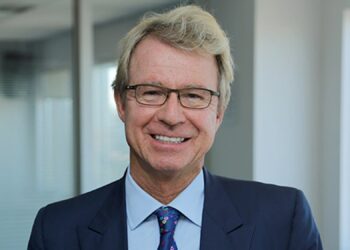
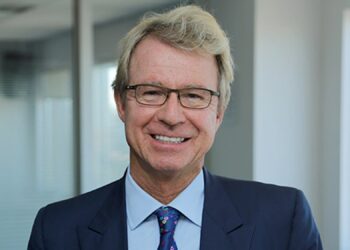
Hugh Young is the managing director of Aberdeen Asia.
Tags: AberdeenAdvice InvestmentFunds ManagementRegulationsTechnology

Related Posts

Relative Return Insider: MYEFO, US data and a 2025 wrap up

by Laura Dew
December 18, 2025

In this final episode of Relative Return Insider for 2025, host Keith Ford and AMP chief economist Shane Oliver wrap...

Relative Return Insider: RBA holds, Fed cuts and Santa’s set to rally

by Staff
December 11, 2025

In this episode of Relative Return Insider, host Keith Ford and AMP chief economist Shane Oliver unpack the RBA’s decision...

Relative Return Insider: GDP rebounds and housing squeeze getting worse

by Staff Writer
December 5, 2025

In this episode of Relative Return Insider, host Keith Ford and AMP chief economist Shane Oliver discuss the September quarter...

Leave a Reply Cancel reply

Your email address will not be published. Required fields are marked *

VIEW ALL
Promoted Content

Consistency is the most underrated investment strategy.

In financial markets, excitement drives headlines. Equity markets rise, fall, and recover — creating stories that capture attention. Yet sustainable...

by Industry Expert
November 5, 2025
Promoted Content

Jonathan Belz – Redefining APAC Access to US Private Assets

Winner of Executive of the Year – Funds Management 2025After years at Goldman Sachs and Credit Suisse, Jonathan Belz founded...

by Staff Writer
September 11, 2025
Promoted Content

Real-Time Settlement Efficiency in Modern Crypto Wealth Management

Cryptocurrency liquidity has become a cornerstone of sophisticated wealth management strategies, with real-time settlement capabilities revolutionizing traditional investment approaches. The...

by PartnerArticle
September 4, 2025
Editorial

Relative Return: How fixed income got its defensiveness back

In this episode of Relative Return, host Laura Dew chats with Roy Keenan, co-head of fixed income at Yarra Capital...

by Laura Dew
September 4, 2025

Join our newsletter

View our privacy policy, collection notice and terms and conditions to understand how we use your personal information.

Podcasts

Relative Return Insider: MYEFO, US data and a 2025 wrap up

December 18, 2025

Relative Return Insider: RBA holds, Fed cuts and Santa’s set to rally

December 11, 2025

Relative Return Insider: GDP rebounds and housing squeeze getting worse

December 5, 2025

Relative Return Insider: US shares rebound, CPI spikes and super investment

November 28, 2025

Relative Return Insider: Economic shifts, political crossroads, and the digital future

November 14, 2025

Relative Return: Helping Australians retire with confidence

November 11, 2025

Top Performing Funds

FIXED INT - AUSTRALIA/GLOBAL BOND
Fund name
3 y p.a(%)
1
DomaCom DFS Mortgage
211.38
2
Loftus Peak Global Disruption Fund Hedged
110.90
3
SGH Income Trust Dis AUD
80.01
4
Global X 21Shares Bitcoin ETF
76.11
5
Smarter Money Long-Short Credit Investor USD
67.63
Money Management provides accurate, informative and insightful editorial coverage of the Australian financial services market, with topics including taxation, managed funds, property investments, shares, risk insurance, master trusts, superannuation, margin lending, financial planning, portfolio construction, and investment strategies.

Subscribe to our newsletter

View our privacy policy, collection notice and terms and conditions to understand how we use your personal information.

About Us

  • About
  • Advertise
  • Contact
  • Terms & Conditions
  • Privacy Collection Notice
  • Privacy Policy

Popular Topics

  • Financial Planning
  • Funds Management
  • Investment Insights
  • ETFs
  • People & Products
  • Policy & Regulation
  • Superannuation

© 2025 All Rights Reserved. All content published on this site is the property of Prime Creative Media. Unauthorised reproduction is prohibited

No Results
View All Results
NEWSLETTER
  • News
    • All News
    • Accounting
    • Financial Planning
    • Funds Management
    • Life/Risk
    • People & Products
    • Policy & Regulation
    • Property
    • SMSF
    • Superannuation
    • Tech
  • Investment
    • All Investment
    • Australian Equities
    • ETFs
    • Fixed Income
    • Global Equities
    • Managed Accounts
  • Features
    • All Features
    • Editorial
    • Expert Analysis
    • Guides
    • Outsider
    • Rate The Raters
    • Top 100
  • Media
    • Events
    • Podcast
    • Webcasts
  • Promoted Content
  • Investment Centre
  • Expert Resources
  • About
  • Advertise
  • Contact Us

© 2025 All Rights Reserved. All content published on this site is the property of Prime Creative Media. Unauthorised reproduction is prohibited